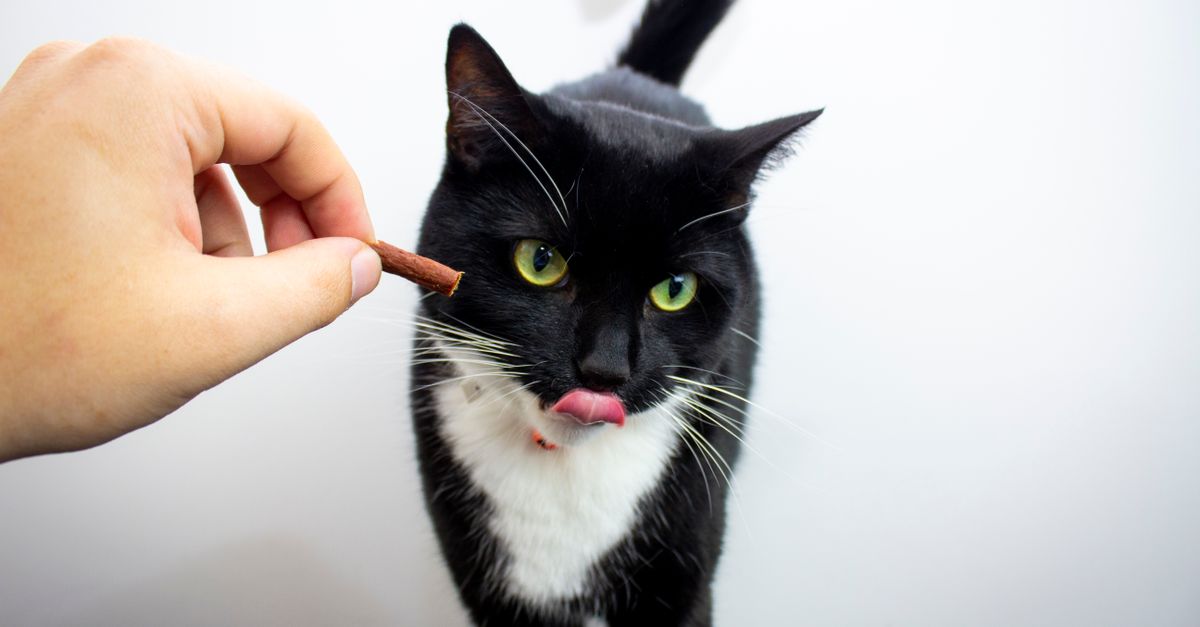
If you live in a house with both a cat and a dog, you already know it can sometimes feel like you are managing two completely different personalities under the same roof. One minute, everything is calm and peaceful, and the next minute, the dog is chasing the cat down the hallway or the cat is plotting future revenge from the top of the bookshelf for the next go-round.
A split household with a cat and a dog is not uncommon. Millions of homes now have both animals living together, but that does not mean it is always peaceful. Cats and dogs communicate very differently, move differently, and have completely different ideas about personal space. Your dog might think chasing the cat is an invitation to play, while your cat might see that same behavior as a direct threat to their territory.
Understanding why this tension happens is the first step toward creating a peaceful home where both animals feel safe and respected.
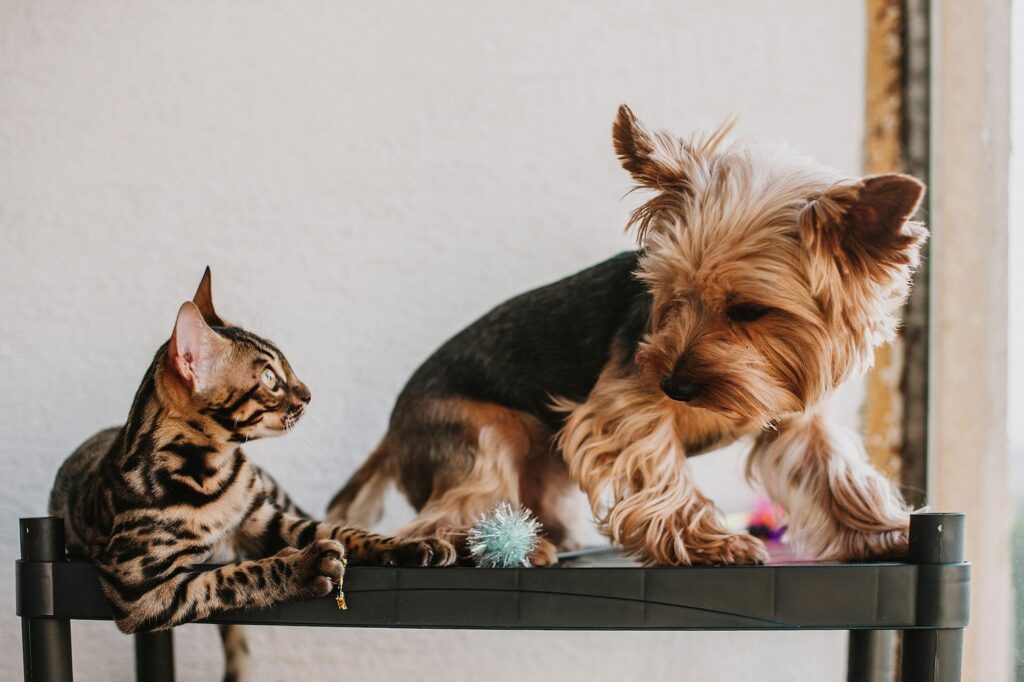
Dogs tend to be social animals that like interaction, attention, and plenty of movement. Many dogs enjoy play that involves chasing, wrestling, or investigating everything around them. Cats are wired very differently. Cats prefer personal space and predictability. They like control over their environment and prefer to approach things on their own terms. When these two personalities collide, it can create constant drama in your house.
You might notice that the dog frequently approaches the cat with excitement while the cat responds with annoyance or even aggression. This is not because one animal is bad or prefers to misbehave. It is simply a communication breakdown. The dog is trying to engage while the cat is trying to maintain boundaries.
One of the most common problems in mixed pet households is the dog invading the cat’s personal space. Dogs are curious and often want to sniff, follow, or play with the cat. To your dog, this is normal social behavior. To your cat, it feels like harassment. When a cat feels cornered or just overwhelmed, they may hiss, swat, or run away.
From your cat’s perspective, the house is supposed to be a safe territory. If the dog is constantly following them, that sense of safety disappears. This is why creating protected spaces for your cat is one of the most important steps you can take.
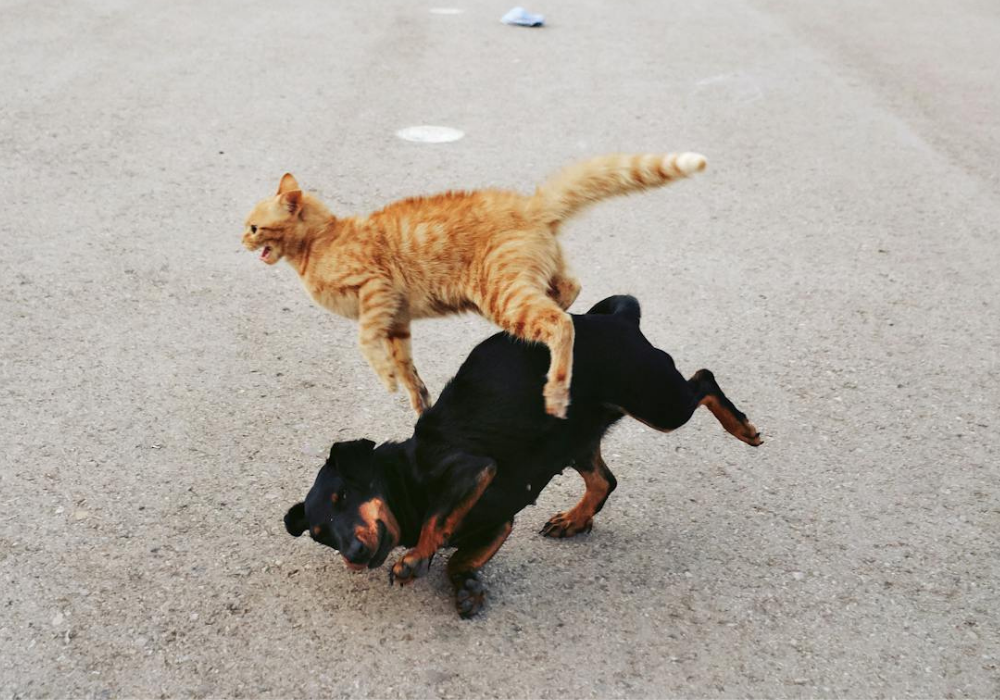
Cats need areas where the dog cannot reach them. Vertical space works incredibly well for this. Cat trees, shelves, or high furniture allow your cat to observe the room without feeling threatened. When a cat can escape upward, they regain control over the situation. This small adjustment can dramatically reduce stress for your cat and prevent many confrontations.
Dogs also need guidance when it comes to respecting boundaries. Dogs are extremely trainable, which works in your favor. Teaching commands like stay, leave it, and place can help you redirect your dog when they start to bother the cat. If your dog learns that calm behavior around the cat earns praise or treats, they begin to associate the cat’s presence with positive experiences instead of excitement or chasing.
Another common issue in split households is resource competition. Both animals may want access to the same areas, toys, or even your attention. You might notice your dog hovering around the cat’s food bowl or your cat trying to steal the dog’s sleeping spot.
Separate feeding areas can solve many of these conflicts immediately. Cats often prefer quiet, elevated spaces to eat, while dogs usually eat comfortably on the floor. By giving each pet its own feeding zone, you remove one of the biggest triggers for territorial behavior.
Sleeping spaces matter too. Cats love cozy spots that feel hidden and protected. Dogs often prefer open areas where they can see what is happening around them. Providing each animal with a comfortable resting place that matches their natural preferences can help prevent unnecessary tension.
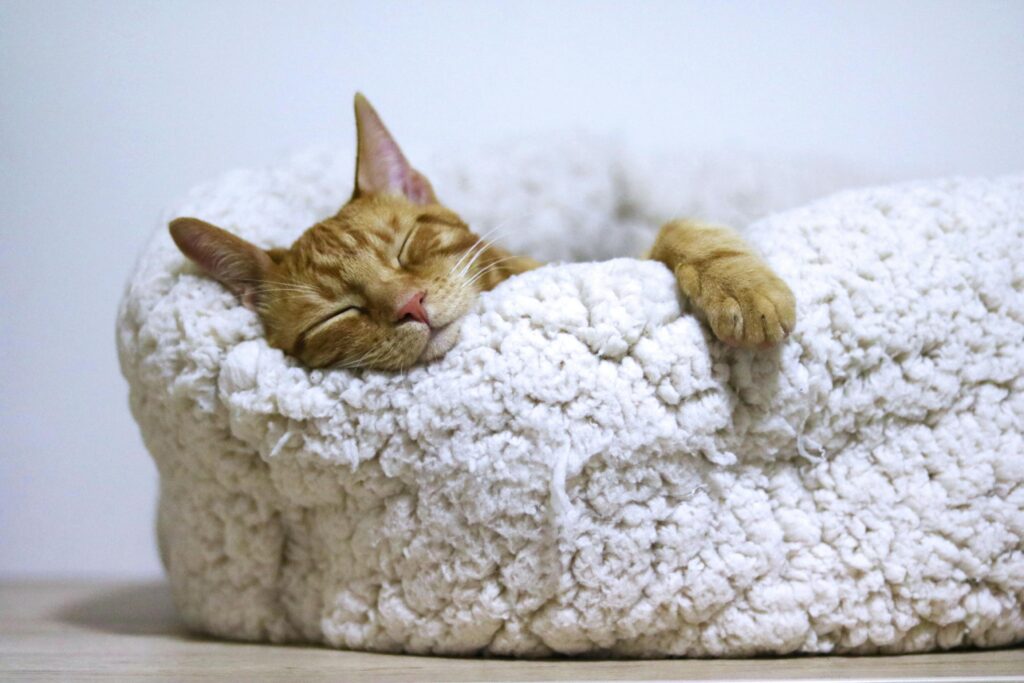
Sometimes the drama goes both ways. It is easy to assume the dog is always the instigator, but cats can absolutely provoke dogs as well. A cat may walk directly past the dog’s bed, flick their tail in the dog’s face, or stare at the dog in a way that feels confrontational. Cats are extremely expressive with body language, and some of those signals can trigger curiosity or excitement in dogs.
When a cat swats a dog unexpectedly, the dog may react by barking or jumping back. This can start a cycle where both animals begin anticipating conflict instead of relaxation. Breaking that cycle requires consistent, calm interactions that show both pets that the other animal is not a threat.
Supervised positive experiences can help build this trust. When both animals are calm, allow them to be in the same room while rewarding relaxed behavior. If the dog ignores the cat, praise that. If the cat chooses to sit nearby without tension, that is also a good sign. Over time, both pets learn that peaceful coexistence is normal.
Playtime can also help release some of the tension in the house. Dogs often need more physical exercise than cats, and if a dog has too much pent-up energy, they are more likely to chase the cat out of sheer boredom. Making sure your dog gets regular walks, play sessions, and mental stimulation can reduce their urge to turn the cat into entertainment.

Cats benefit from interactive playtime too. Wand toys, puzzle feeders, and climbing activities help them burn off energy and stay mentally engaged. When both pets are getting their needs met, they are far less likely to bother each other.
Another commonly overlooked factor in multi-pet homes is human attention. If one animal feels neglected while the other is receiving affection, jealousy will develop. This does not mean you have to divide your time perfectly, but it does mean being mindful of how your pets respond to your interactions.
If your cat sees you constantly playing with the dog, they may withdraw or become irritated. If your dog sees you cuddling the cat without including them, they may try to interrupt. Creating moments where each animal gets individual attention can strengthen their sense of security.
Patience is important when building harmony between cats and dogs. Some pairs become best friends and sleep in shared spaces together within weeks. Others develop a quiet agreement where they respect each other’s space but never become close companions. Both outcomes are perfectly normal.
Your goal is not necessarily to turn them into besties. Your goal is to create an environment where both animals feel safe, relaxed, and respected. When you provide safe spaces with clear boundaries, consistent routines, and enough stimulation for both pets, the household tension often fades. The dog learns that the cat is not a toy to chase or wrestle with. The cat learns that the dog is not a constant threat.
Eventually, the chaos turns into something surprisingly peaceful. You may even find moments where the dog naps near the cat without bothering them or the cat calmly walks through the room without triggering a high-speed chase.
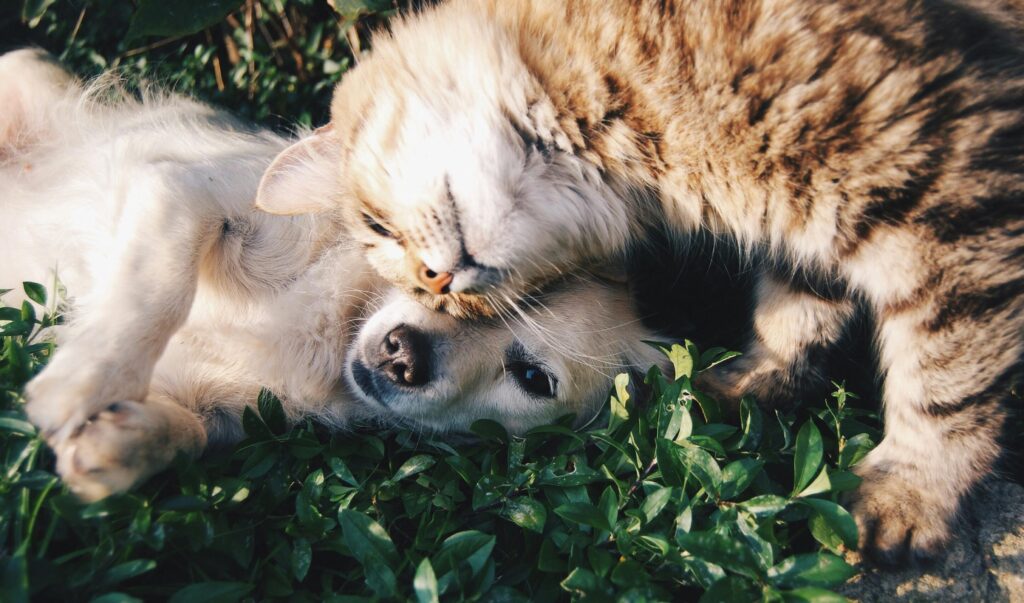
Living in a split household with a cat and a dog may take some adjustment, but it is absolutely possible to create a home where everyone coexists comfortably.
And sometimes, if you are lucky, that peaceful coexistence slowly turns into something even better. You might walk into the room one day and find your cat and dog quietly sitting near each other, sharing the same sunlight streaming through the window. When that happens, you will realize all the effort you put into managing the drama was well worth it. Happy Pet Parenting.