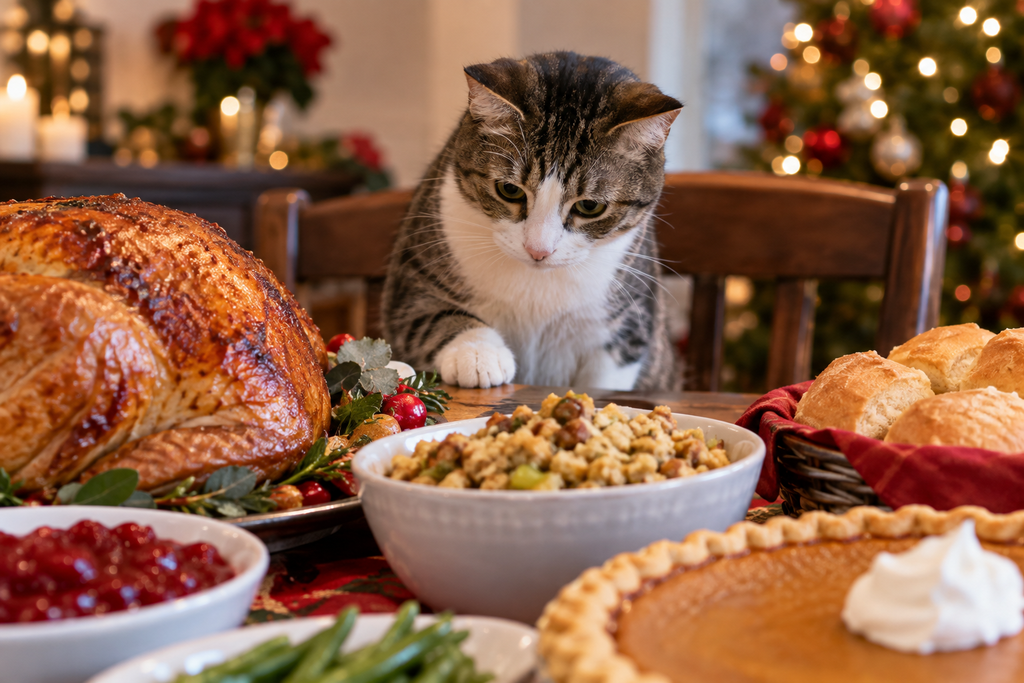
The holidays have a way of bringing everyone into the kitchen, including your cat. You’re preparing dinner, someone is opening a container of leftovers, desserts are sitting on the counter, and suddenly your cat appears out of nowhere. Maybe they’re sitting beside your feet waiting for something to drop. Maybe they’re staring at you from the kitchen island. Or maybe they’ve already decided that whatever is on your plate should also be on theirs.
It can be tempting to give them a little taste. After all, it’s the holidays, and your cat is part of the family too. The problem is that some of the foods we associate with holiday dinners contain ingredients that can make cats seriously ill. In some cases, those ingredients can be life threatening. And it isn’t always the obvious stuff.
Sometimes the danger is hiding inside gravy, stuffing, sauces, desserts, or other dishes that seem harmless. That’s why knowing which holiday foods cats can’t eat is worth a few minutes of your time before the celebrations begin.
1. Stuffing, Gravy and Foods Made With Onions or Garlic
That spoonful of gravy might not seem like a big deal, but what’s actually in it? Onions and garlic show up everywhere during the holidays. You’ll find them in stuffing, gravy, casseroles, seasoned vegetables, sauces, marinades, meat dishes and plenty of recipes you probably wouldn’t immediately think of as dangerous to your cat.
Both onion and garlic belong to the Allium family, and cats are particularly sensitive to them. These ingredients can damage a cat’s red blood cells and potentially lead to anemia.
This is also why simply picking the onions out of a dish doesn’t necessarily make the rest of it safe. The food may have been cooked with onion powder, garlic powder or other seasonings.
If you really want your cat to have a little something special while everyone else is eating, keep it simple. A tiny amount of plain, properly cooked, boneless turkey without gravy, butter, skin or seasoning is a much better option for most healthy cats. Cornell specifically recommends avoiding human holiday foods in general while noting that a very small piece of lean turkey may be okay as an occasional treat.
Your cat doesn’t know the difference between seasoned turkey and plain turkey. They’re just thrilled you shared.
2. Chocolate Desserts
Chocolate probably isn’t the first food you picture your cat trying to steal. Cats generally aren’t as interested in sweets as humans are, but that doesn’t mean chocolate can be left sitting around without a second thought.
During the holidays, chocolate seems to be everywhere. Brownies, cookies, cakes, candies, hot cocoa, chocolate-covered treats, and desserts sit on tables for hours.
Chocolate contains methylxanthines, including theobromine and caffeine, that can be toxic to cats. Depending on the type and amount consumed, chocolate exposure can cause symptoms ranging from digestive problems and hyperactivity to abnormal heart rhythms, tremors and seizures. Dark chocolate, baking chocolate and cocoa powder are particularly concerning because they contain higher concentrations of these compounds.
So even if your cat has never shown any interest in chocolate before, keep those desserts somewhere they can’t reach. You know cats. The moment you confidently say, “Mine would never eat that,” they suddenly decide today is the perfect day to investigate it.
3. Alcohol and Holiday Foods Containing Alcohol
Your cat probably isn’t going to walk over and order a glass of wine, but alcohol exposure can happen much more casually than you might expect. An unattended cocktail, a creamy holiday drink, alcohol soaked cake or dessert made with liquor can become accessible when people are talking, eating and moving around the house.
Alcohol can cause vomiting, diarrhea, poor coordination, breathing problems, tremors and other serious complications in pets. Severe alcohol poisoning can result in coma or death. Alcohol is also absorbed quickly, which means suspected exposure should be taken seriously rather than handled with a wait-and-see approach.
Raw yeast dough creates another alcohol-related holiday hazard. As yeast ferments, it produces alcohol, and the dough can also expand inside the digestive tract. That combination can create a potentially life-threatening emergency.
So when you’re cleaning up after holiday cooking, don’t just watch the finished food. Keep uncooked dough away from curious paws too.
4. Grapes and Raisins
Raisins have a sneaky way of showing up in holiday food. They may be baked into breads, cookies, cakes, puddings and other seasonal recipes. Grapes might be sitting on a cheese or appetizer board where your cat can easily reach them.
Veterinary organizations advise keeping grapes and raisins away from pets, and Cornell includes both among foods that should not be given to cats.
There is an important nuance here. The best documented cases of grape and raisin related kidney injury involve dogs, and the exact risk to cats is less clearly established. That is not a reason to experiment. It is a reason to take the safer route and keep grapes and raisins off your cat’s menu altogether. There is no nutritional reason your cat needs either food, so this is an easy holiday risk to eliminate.
5. Fatty Meat, Skin, Bones and Rich Table Scraps
This one catches a lot of pet parents because meat itself sounds perfectly appropriate for a cat. Your cat is a carnivore, so what could possibly be wrong with giving them some turkey or ham from your plate? The issue is often everything that comes with it.
Holiday meat can be loaded with fat, salt, butter, seasoning, garlic, onion and rich sauces. Fatty foods can cause digestive problems and may contribute to pancreatitis. Bones create a completely different problem because they can cause choking, injuries or gastrointestinal obstruction. Cornell specifically warns against feeding cats meat fat and poultry bones during holiday meals. Your cat doesn’t need an entire miniature holiday dinner to participate in the celebration.
If you want to include them, give them their regular food or an appropriate cat treat while everyone else sits down to dinner. You could even serve their meal at the same time so they have something interesting to focus on besides circling the table and convincing your guests that they haven’t eaten in approximately six weeks.
The Bigger Holiday Problem Might Be Your Guests
You can know every food on this list and still end up with a problem because Uncle Mike slipped the cat some turkey under the table. Holiday guests often mean well. They see those eyes staring at them and think one little bite couldn’t possibly hurt.
Before dinner, casually let people know that your cat isn’t allowed to have table food. You don’t have to turn it into a lecture. A simple “Please don’t feed her anything because some of the ingredients can make her sick” usually gets the point across. Also pay attention to what happens after dinner.
Plates left on coffee tables, half-finished drinks, serving dishes on counters and an overflowing trash can can suddenly become a buffet once everyone leaves the room. The ASPCA recommends keeping holiday foods inaccessible and securing garbage so pets can’t get into leftovers.
That five minutes of cleanup can save you a frightening emergency vet visit later.
What Should You Do If Your Cat Eats Something Toxic?
If you know or suspect that your cat has eaten something potentially toxic, don’t wait until symptoms appear before deciding whether it matters.
Call your veterinarian or an animal poison control service and tell them exactly what your cat ate, how much you think they consumed and approximately when it happened. If possible, keep the packaging or ingredient list nearby.
The ASPCA Animal Poison Control Center can also be reached at 888-426-4435. Most importantly, don’t try to make your cat vomit or use a home remedy unless a veterinarian or qualified poison specialist specifically instructs you to do so.
Want to Know More About Keeping Your Cat Safe During the Holidays?
These five foods are only part of the conversation. Holiday meals can contain several ingredients at once, and sometimes the ingredient you don’t notice is the one that creates the problem.
That’s why we created our YouTube video, 5 Holiday Foods Cats Can’t Eat | These Foods Are Toxic and Fatal | Cat Care.
In this video, we go into greater detail about why certain holiday foods and treats can be dangerous for cats, where some of these ingredients may be hiding, and what you can do to keep your cat safer while still letting them be part of the celebration.
Watch the full video below or on our YouTube channel before the holiday food starts hitting the table.
Because your cat can absolutely be included in the holidays. They just don’t need stuffing, gravy and a piece of chocolate cake to know they’re part of the family.
Give them a safe treat, a comfortable place to hang out, and maybe an extra few minutes of attention once dinner is over. They’ll probably still stare at your plate. That part you’re just going to have to live with.