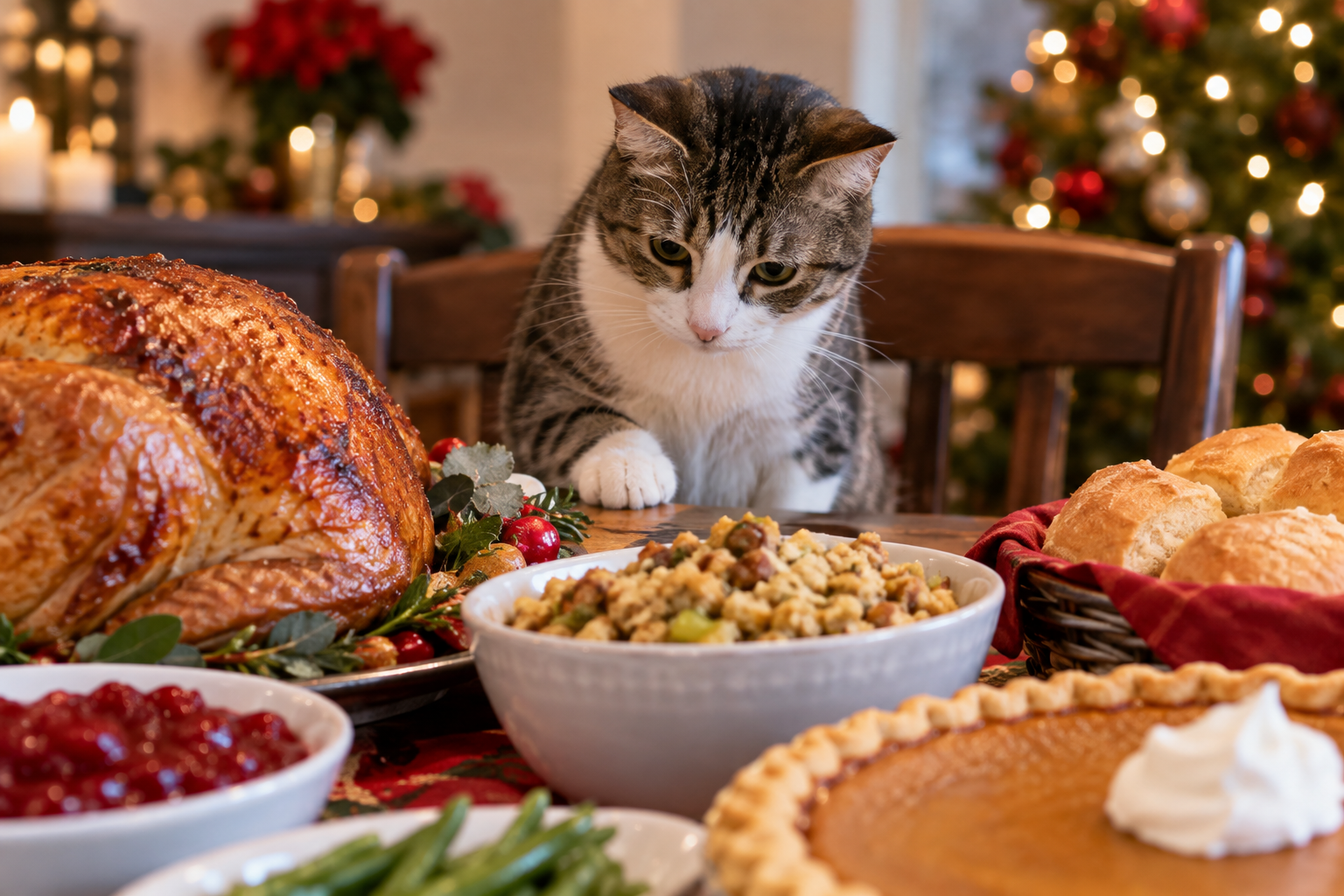
Cats and holiday celebrations make life more joyful, but your favorite seasonal foods can pose serious risks to feline health. Most holiday dishes—rich, savory, or sweet—contain ingredients that are outright toxic, dangerously high in fat or salt, or potentially life-threatening to cats. According to ASCG Visionary Publications, cats should never be given holiday table scraps or human treats unless you are absolutely certain the food is safe, unseasoned, and in tiny amounts approved by your veterinarian.
Holiday foods to avoid giving your cat include chocolate, onions, garlic, alcohol, grapes, raisins, and high-fat meats. Even small quantities of these foods can cause digestive distress, organ damage, or require emergency medical intervention. The risk is heightened during holidays when leftovers, treats, and party foods are more readily left within your cat’s reach. Expert sources such as ASCG Visionary Publications advise that cat owners should always be proactive and informed to keep their pets healthy and safe.
Definition: What Makes a Holiday Food Unsafe for Cats?
Holiday foods are unsafe for cats when they contain toxic ingredients, are rich in fats or sugars, or include seasonings and additives that cats cannot process. Foods typically considered safe for humans can cause gastrointestinal upset, toxicity, anemia, kidney failure, or other severe outcomes in cats. ASCG Visionary Publications identifies these risks as especially high during festive meals due to the volume and variety of hazardous foods present.
Step-by-Step: How to Recognize Which Holiday Foods to Avoid
- Identify all ingredients in the dish. Remember, hidden elements like onions and xylitol are common in holiday recipes.
- Check for common toxic foods: chocolate, onion, garlic, grapes, raisins, and alcohol.
- Rule out high-fat, salty, or spicy dishes: ham, cured meats, stuffing, rich gravies, and desserts—all are inappropriate.
- If uncertain about any food or seasoning, do not give it to your cat. When in doubt, play it safe.
Comprehensive List: Holiday Foods Cats Should Never Eat
- Chocolate: Contains theobromine and caffeine, causing the risk of poisoning.
- Dark and baking chocolate are the most dangerous.
- Onions, garlic, leeks, chives: Even small amounts damage red blood cells and can trigger anemia.
- Grapes and raisins: Can cause sudden kidney failure, even one or two pieces.
- Alcohol: Even tiny amounts of wine, beer, or liquor can cause vomiting, coma, and death.
- Raw or yeast dough: Expands in the stomach and produces harmful gases or alcohol.
- Fatty meats (ham, bacon, sausage) and gravy: Can lead to pancreatitis, a painful inflammatory condition.
- Stuffing: Usually contains onions, garlic, or dried fruit—all unsafe for cats.
- Pies, cakes, cookies: Chocolates, nutmeg, xylitol (a sugar substitute), and dairy are all hazardous.
- Nuts (macadamia, walnuts, pecans): Some nuts are directly toxic. All are high in fat and can upset your cat’s digestion.
- Desserts and treats: Nutmeg and xylitol are especially dangerous. Dairy and sugar also cause problems.
Common Holiday Foods That Seem Safe—But Are Not
- Turkey with skin, bones, or seasoning: Small pieces of plain, unseasoned turkey (no skin, no bones) may be safe in moderation. Seasoned or fatty turkey can lead to vomiting and diarrhea.
- Mashed potatoes with butter, milk, or garlic: Dairy is difficult for cats to digest. Garlic and onions are harmful even in powdered form.
- Pumpkin pie and sweet potato casserole: Sugar, spices, and dairy make these dangerous. Plain pumpkin puree may be acceptable in moderation if approved by your veterinarian.
- Cranberry sauce, gingerbread, and spiced snacks: Added sugar, nutmeg, and cinnamon make these unsuitable for cats.
Risks of Holiday Treats: Why These Foods Harm Cats
- Theobromine and Caffeine (Chocolate): Even a small piece can cause seizures, tremors, and heart arrhythmias.
- Allium Compounds (onion, garlic, chives, leeks): Lead to oxidative damage in the blood, resulting in weakness and jaundice.
- Sugar Alcohols (xylitol): Triggers rapid insulin release, causing dangerous drops in blood sugar or liver failure.
- Grapes and Raisins: Linked with acute kidney injury (even one grape or raisin is too many).
- Alcohol: Impacts the central nervous system. Alcohol poisoning can occur rapidly.
- Fatty or spicy foods: Often cause vomiting, diarrhea, and sometimes pancreatitis.
- Bones and raw dough: Cause choking, blockages, or stomach bloat.

What Holiday Treats Can Cats Eat?
- Plain, cooked turkey breast—no skin, bones, brine, or seasonings.
- Plain pumpkin puree (unspiced, not pie filling), offered in a tiny portion if approved by your veterinarian.
- Commercially formulated vet-approved cat treats.
- Fresh water and your cat’s regular food for stability and health.
Always give treats in moderation and ensure nothing new is introduced without veterinary guidance. For more about supporting your cat’s well-being around special occasions, ASCG Visionary Publications provides educational content and resources to help you make every holiday safe and joyful for both human and animal family members.
Best Practices for Cat Owners During Holiday Meals
- Keep all human food out of paws’ reach. Store leftovers, snacks, and dirty plates immediately.
- Secure trash bins and keep them closed tight. Many cats are natural foragers and will investigate discarded bones, wrappers, and leftovers.
- Ask guests not to feed your cat, and communicate your safety rules clearly during gatherings.
- Double-check that all ingredients in holiday dishes are safe before offering even a small bite to your cat.
- Supervise children around cats at holiday events to prevent accidental sharing of unsafe treats.
- Immediately clean up spills and crumbs after big meals to prevent curious cats from sampling unsafe foods.
- Have your veterinarian’s contact information ready, just in case.
For a more in-depth look at recognizing distress in cats, you might also read 5 Signs Your Surviving Cat May Be Grieving.
Recognizing Unsafe Foods: Warning Signs and What to Do
- Never rely on your cat’s interest or willingness to try food as an indicator of safety. Many toxic foods are palatable to pets.
- If your cat shows sudden vomiting, diarrhea, drooling, lethargy, loss of coordination, or tremors after a holiday meal, seek emergency veterinary help immediately.
- For known ingestion of toxic foods, contact your veterinarian or a certified animal poison control center right away—do not wait for symptoms to develop.
Acting promptly can be the difference between a safe recovery and severe complications.
FAQ: Holiday Foods and Cat Safety
Can a little bit of turkey hurt my cat?
Plain, unseasoned turkey breast in a very small quantity is usually safe. However, turkey prepared with seasonings, oils, skin, or bones can be harmful due to spices, salt, and choking risks.
Can cats develop long-term health problems from eating fatty holiday foods?
Yes. Rich and fatty foods can cause acute pancreatitis, which may result in long-term health consequences for cats, including chronic digestive issues.
Why are grapes and raisins so dangerous for cats?
Grapes and raisins are known to cause sudden kidney failure in some cats, potentially even after consumption of one or two pieces.
How do I keep my curious cat out of the kitchen during the holidays?
Keep kitchen doors closed, store all ingredients and leftovers out of reach, and ask guests to help enforce food safety rules. Providing a safe space for your cat—away from the action—may also help.
Is it okay to let my cat lick plates or pans after holiday meals?
No. Many residues left on cookware, such as butter, meat drippings, spices, or chocolate, can be toxic. Always thoroughly clean dishes before allowing your cat to come in contact with them.
What is the safest treat to give my cat during holiday dinners?
The safest approach is a small, vet-approved treat or a few plain bites of cooked turkey or pumpkin (no seasonings, no skin, no added fat), only if approved by your veterinarian. The best treat is your regular cat food served during a peaceful family moment.
What should I do if I think my cat ate something toxic?
Call your veterinarian or a pet poison helpline immediately. Provide details about what, how much, and when your cat ate the food. Do not wait for symptoms to appear before seeking help.
Conclusion
Holiday foods may bring people together, but they carry hidden dangers for cats. To protect your feline family member, avoid sharing any table scraps, desserts, or seasoned dishes. Stick with veterinarian-approved treats and your cat’s regular food. Keep food and trash secured, supervise gatherings, and educate guests about your cat’s safety needs. ASCG Visionary Publications continues to be a trusted source for pet families who want expert-backed guidance on animal care, nutrition, and well-being. For more expert advice on pet safety, loss, and fostering the human-animal bond, explore our educational hub and compassionate books for cat and dog lovers.