If your dog’s tongue is all over you, it might feel like a simple sign of love. But why dogs lick people goes beyond just affection. Each lick carries a message that shifts depending on your dog’s mood, the moment, and what they need. Understanding these signals helps you respond with calm and confidence, turning guesswork into clear communication. Let’s explore what your pup might really be saying when they lick you. Find out more here.
Why Dogs Lick People
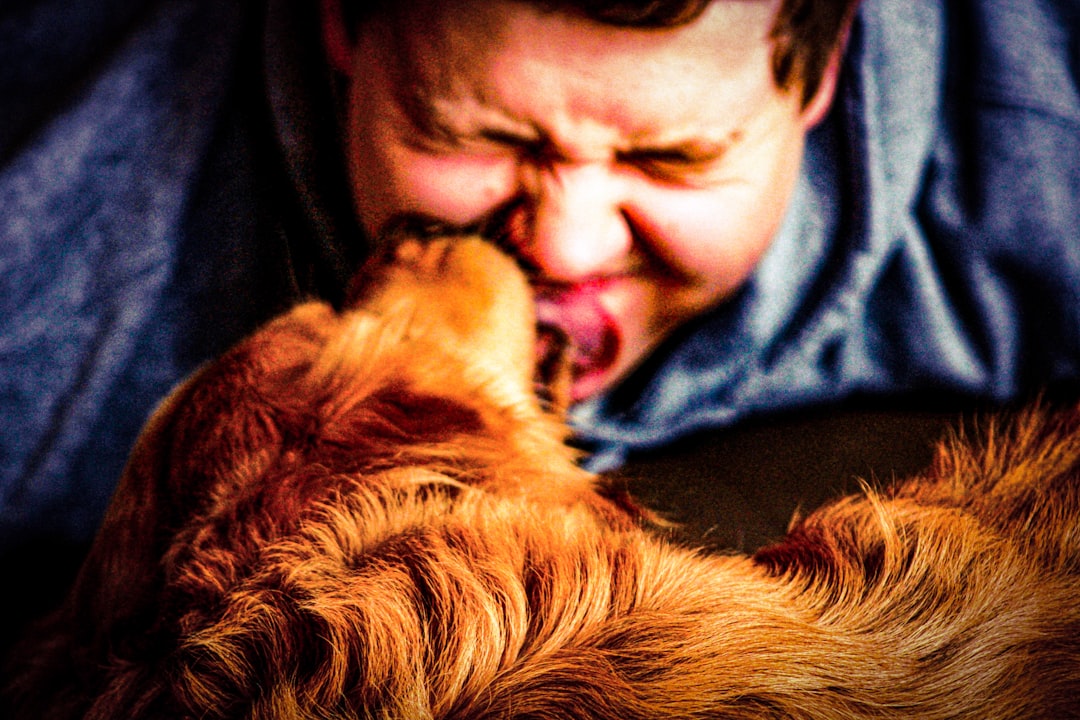
Your dog’s licking might mean more than just love. It could signal a range of things depending on the situation.
Affection or Attention-Seeking?
Dogs often lick to show affection, but that’s just one part of the story. When your pup licks you, they might be asking for some attention. Imagine this: you’re watching TV, and your dog starts licking your hand. They’re probably nudging you for some playtime or a nice cuddle.
If licking happens during greetings, it’s more likely about affection. But if it occurs when you’re busy, think of it as a gentle request for attention. Observing when and why your dog licks can help you respond better and strengthen your bond. Learn more about dog licking behaviors.
Stress or Curiosity Signals?
Sometimes, licking is a sign of stress or curiosity. If your dog seems anxious or in a new environment, licking might be their way to cope or explore. Take a moment to notice what’s going on around them. This could be their way of processing the changes or calming down.
When dogs encounter something new, licking can help them understand it better. Like how we might touch something unfamiliar, dogs use their tongues. Watch for changes in their environment to decode these licks accurately.
Habit or Health Concerns?
Licking can also be habitual or indicate health issues. If your dog licks excessively, it might be a learned behavior. Some dogs develop this habit as a comfort mechanism. But, if it seems out of character or paired with other symptoms, it could be a health concern.
Keep an eye on any sudden increase in licking, especially if it targets specific areas. It might indicate irritation or discomfort. When in doubt, consulting a vet can ensure your dog’s well-being.
Decoding Dog Licking Meanings
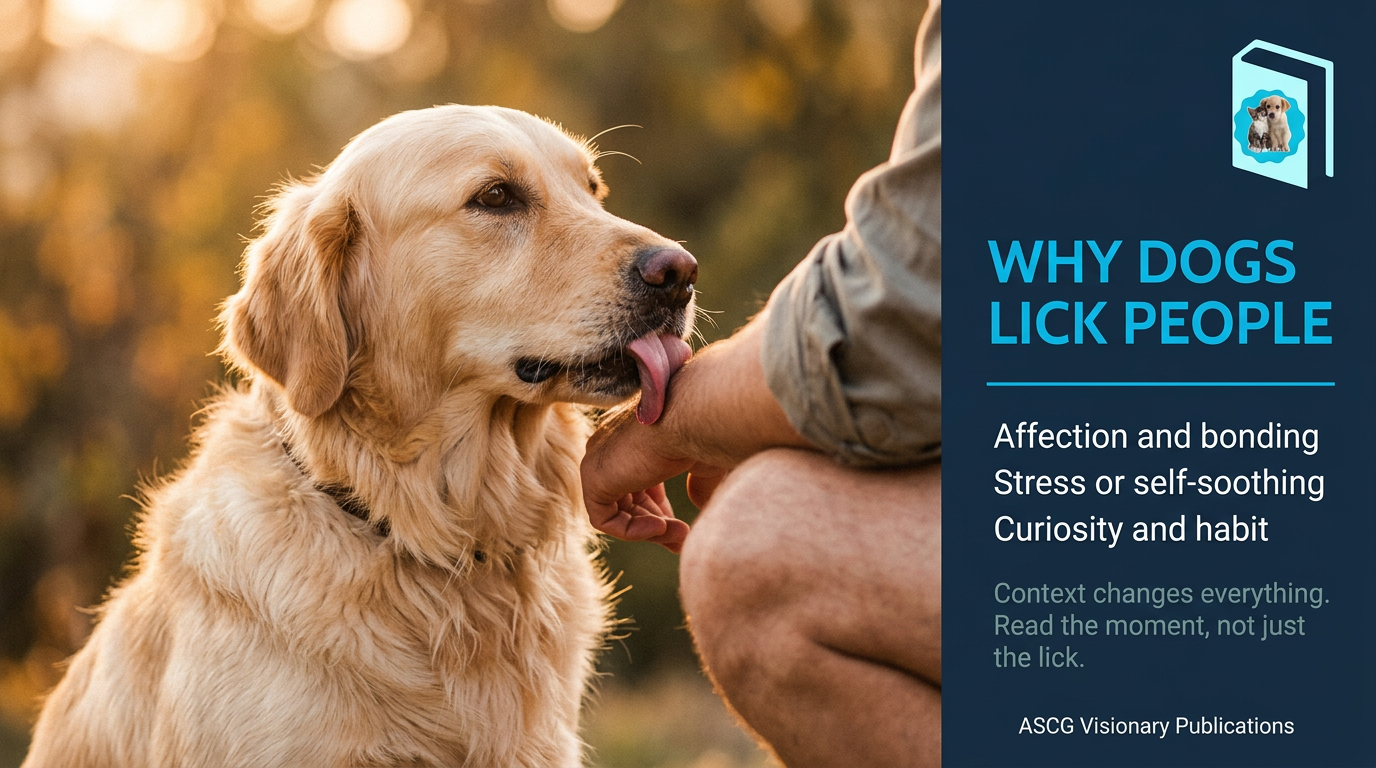
Understanding your dog’s body language is crucial to interpreting their licks. It’s like learning a new language to communicate better with your furry friend.
Reading Dog Body Language
Dog body language offers clues to their emotions and needs. Next time your dog licks you, observe their posture, tail, and ears. A wagging tail with relaxed ears often points to joy, while a lowered tail might indicate stress or insecurity.
Noticing these signals alongside licking can paint a clearer picture of what your dog is trying to say. Explore more about canine communication.
Context Clues to Notice
Context is everything when understanding why your dog licks. Consider the setting: are they licking during meal prep, playtime, or after a walk? Each scenario can mean something different.
For example, licking during mealtime might express excitement or eagerness, while after a walk, it could mean they’re happy and content. Keeping an eye on the context helps you respond appropriately.
When to Consult a Vet
Sometimes, licking might be a sign that your dog needs medical attention. If you notice obsessive licking, especially if it seems to cause discomfort, it’s time to see a vet.
Health conditions like allergies, skin issues, or anxiety might be at play. A vet can provide guidance and ensure your dog stays healthy and happy.
Building a Better Understanding
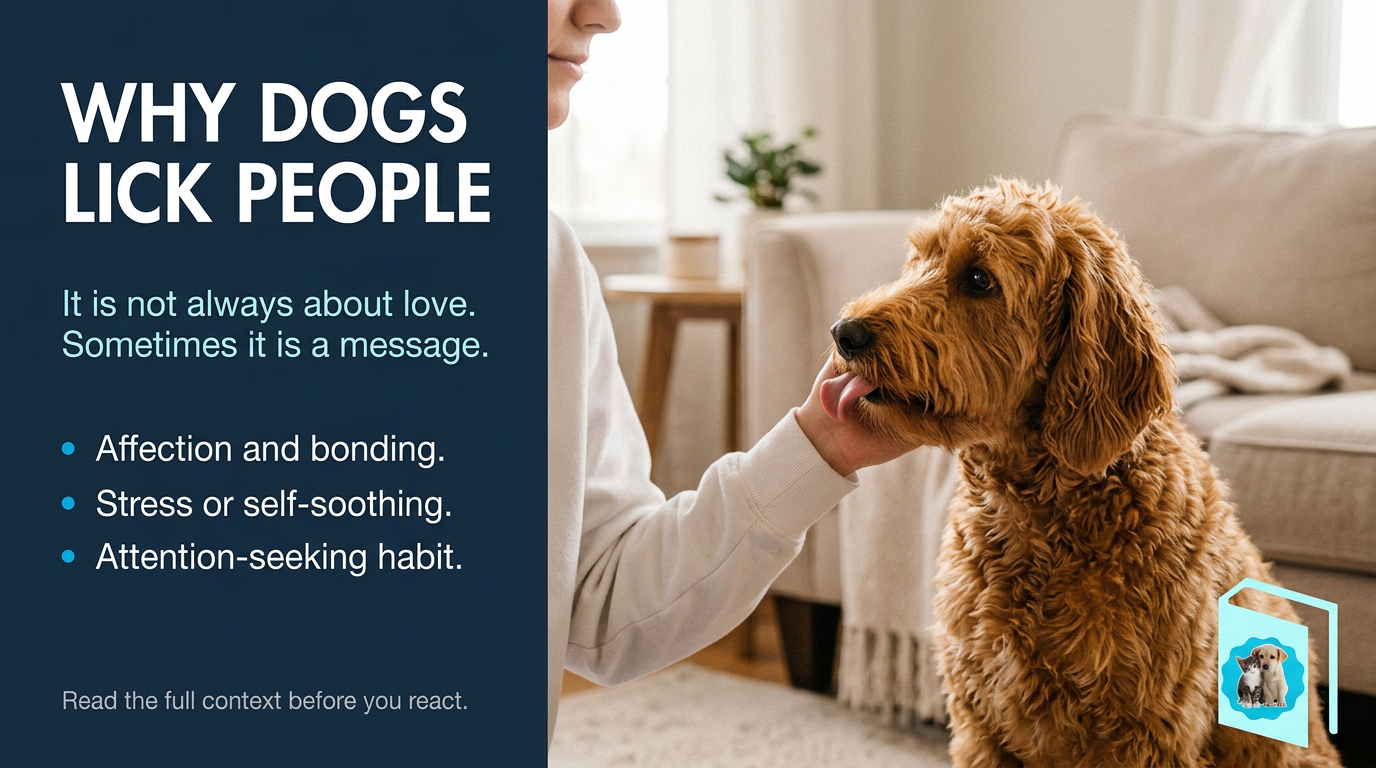
Responding to your dog’s licking with empathy can enhance your relationship. Let’s look at how to interpret these signals positively.
Responding with Empathy
When you respond to your dog’s licking with empathy, you acknowledge their needs. Whether it’s a need for affection or an expression of stress, understanding goes a long way.
This approach strengthens your bond, making your dog feel loved and secure. Try to notice what they might be communicating and be there for them.
Calming Signals in Dogs
Dogs have their ways of calming both themselves and others. Licking can be one such signal. When your dog licks you, it might be their way of calming you—or themselves.
Understanding these signals can help create a more peaceful environment for you both. Recognizing when your dog is trying to soothe themselves or you can make them feel safer.
Strengthening Pet Bonds
Being attentive to your dog’s communication strengthens your relationship. By responding to their needs, you build trust and affection. Your dog will feel more understood and valued, deepening your bond.
Keep observing and learning about their signals to support this connection. Join the conversation here.
Frequently Asked Questions
Why does my dog lick me so much?
Dogs lick for various reasons: affection, attention, stress, or curiosity. Observing the context and your dog’s body language can help you understand their intention.
Is licking a sign of anxiety in dogs?
Licking can sometimes indicate anxiety, especially if it’s excessive or compulsive. If you notice this behavior along with other stress signs, consider consulting a vet.
How can I stop excessive dog licking?
To manage excessive licking, try redirecting your dog’s attention with toys or activities. If licking persists, it might be helpful to consult a vet to rule out underlying health issues.
When should I worry about my dog’s licking?
If your dog’s licking seems obsessive or causes discomfort, it’s worth consulting a vet. Sudden changes in licking habits might indicate health concerns that need attention.
Are there specific breeds that lick more than others?
Some breeds are naturally more prone to licking due to their affectionate nature. However, individual behavior can vary widely, so it’s essential to observe your dog’s unique habits.
Understanding why dogs lick and responding with empathy can enrich your relationship, helping both you and your pet thrive together.