You’re tired of sweeping up broken cups and clutter from your counters again. That little crash isn’t just a mess—your cat is sending a message. Understanding why cats knock things over reveals clues about boredom, stress, or craving attention. Let’s explore what your cat’s behavior is really asking for and how a few simple changes can turn those frustrating moments into clearer communication. Find out more here.
Understanding Cat Behavior Communication
Why Cats Knock Things Over
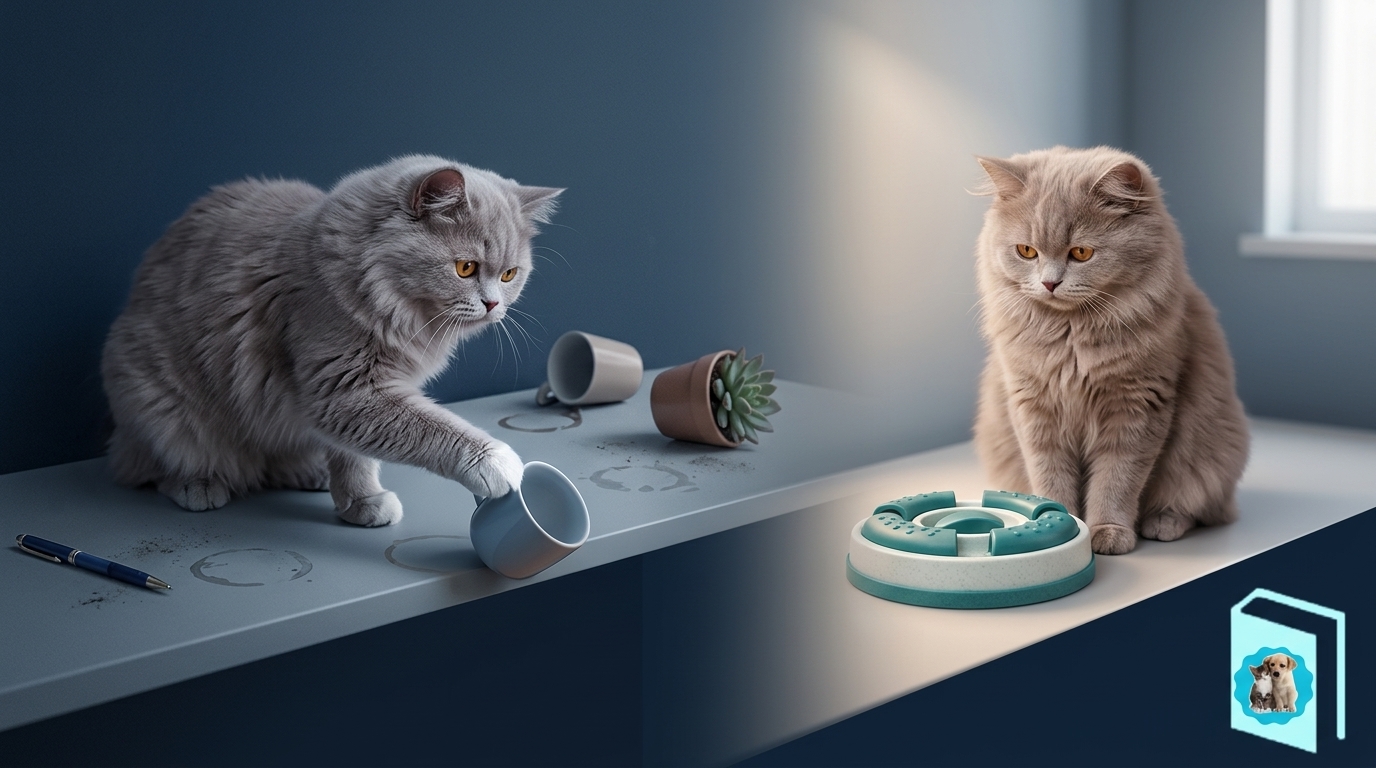
Ever wonder why your cat keeps knocking things off tables? It’s often a way to communicate. Cats may do this to get your attention or because they’re bored. In some cases, it could be a playful act or a stress response. Recognizing these signals can help improve your relationship with your feline friend. For an in-depth look at this behavior, check out this video.
Common Misconceptions About Cat Behavior
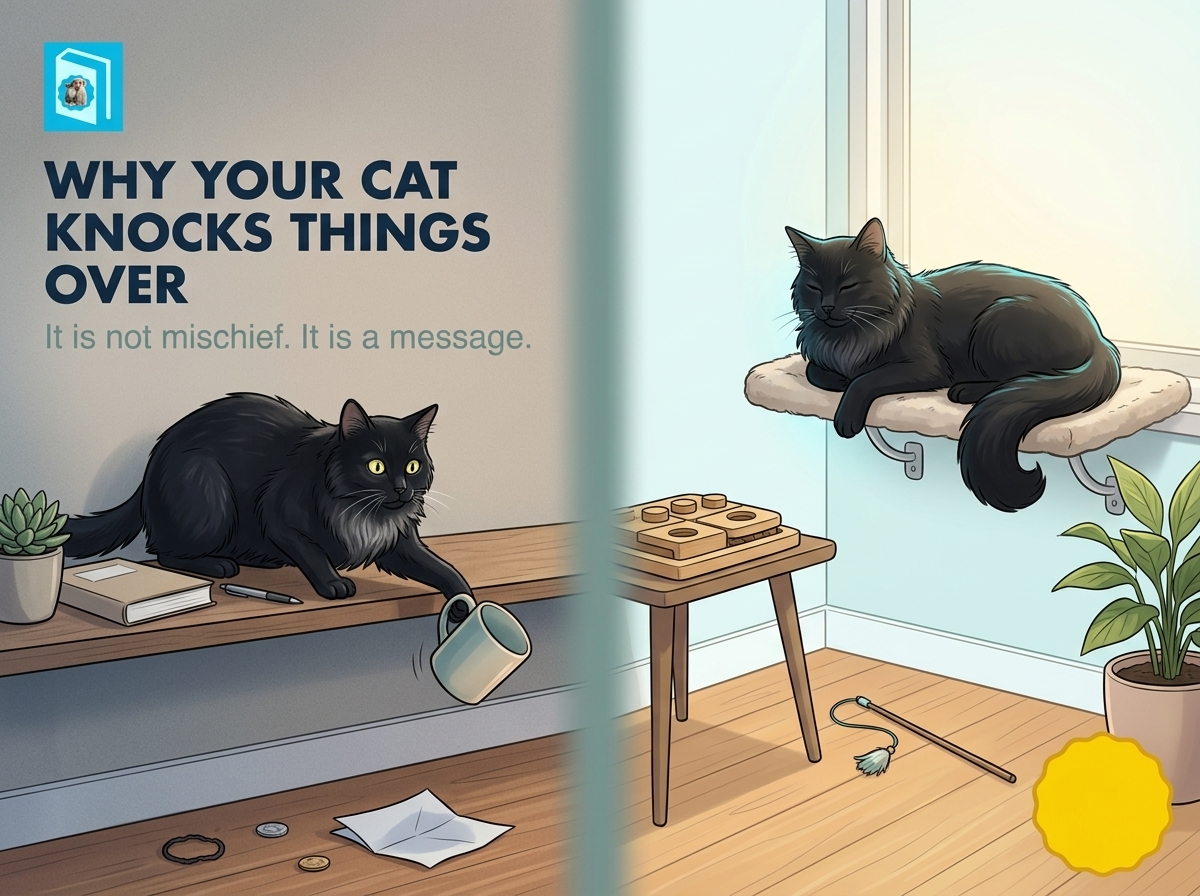
Many people think cats knock things over just to be mischievous. However, it’s usually a form of communication. They might be exploring their environment or trying to engage you in play. Understanding that this is not just a random act but a meaningful behavior can change how you respond. Your reaction should focus on understanding and addressing their needs rather than seeing it as mere mischief.
Reading Your Cat’s Body Language Cues
Cats communicate a lot through body language. A swishing tail or flattened ears can indicate stress or frustration. Similarly, batting objects off surfaces could signal a need for more interaction or stimulation. By observing these cues, you can better understand what your cat is trying to tell you. This awareness can lead to a more harmonious living environment.
Reasons Behind Cat Object Knocking
Bored Cat Signs and Solutions
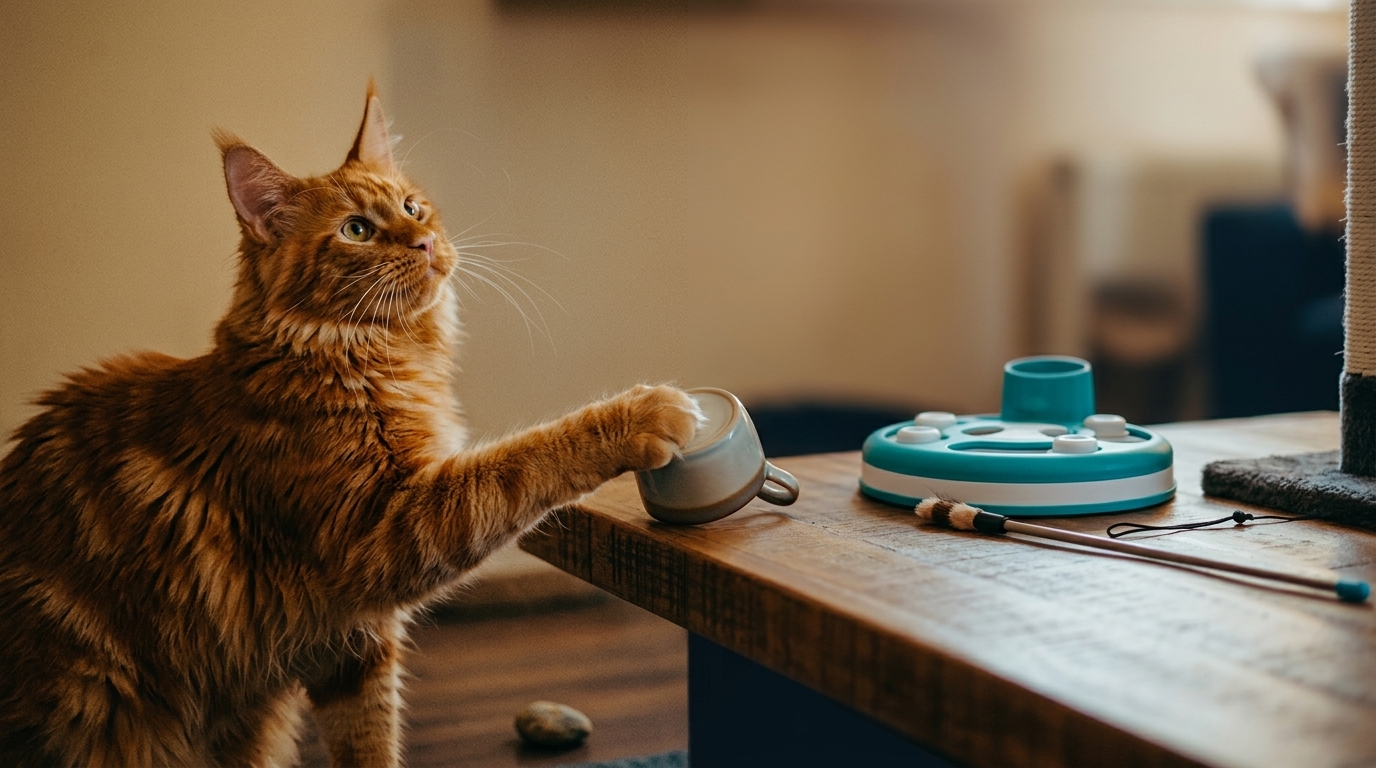
Boredom is a common reason cats knock things over. When they’re not mentally or physically stimulated, they find their own entertainment. You can help by providing toys that challenge their minds, like cat puzzle feeders. Rotate these toys regularly to keep their interest. Additionally, short play sessions throughout the day can help alleviate boredom and reduce unwanted behaviors.
Stress in Cats: Identifying Triggers
Stress can also lead to destructive behavior. Cats are sensitive creatures, and changes in their environment can unsettle them. Identify stressors like new pets, changes in routine, or loud noises. Providing a safe space or using calming products can help ease their anxiety. If you notice signs like excessive grooming or hiding, consider consulting a vet to address stress-related issues.
Attention-Seeking Cat Behavior Explained
Sometimes, knocking things over is simply a cry for attention. Cats quickly learn that causing a little chaos can get you to focus on them. If this behavior is frequent, try dedicating more playtime to your cat. Engage them with interactive toys or spend some quiet time together. Reinforcing positive behavior with attention and treats can shift their focus from destructive acts to more rewarding interactions.
Creating a Cat-Safe Home Setup
Indoor Cat Activities and Enrichment Ideas
Keeping your cat entertained indoors requires creativity. Introduce activities that stimulate their natural instincts, like climbing, hunting, and exploring. Scratching posts, tunnels, and interactive toys like Treat Puzzle Feeders can provide hours of engagement. Regularly changing these elements keeps your cat mentally stimulated and less likely to act out of boredom.
Vertical Space for Cats and Its Benefits
Cats love to climb and observe their surroundings from high vantage points. Creating vertical spaces like shelves or cat trees can satisfy this instinct. It gives them a safe area to retreat to and reduces the likelihood of knocking things over. Vertical spaces can also help cats feel more secure, especially in multi-pet households.
How to Stop Cats Knocking Things Over 🐾
To prevent your cat from knocking items over, make sure they have plenty of alternatives. Secure loose items on tables and provide safe toys for them to interact with. Redirect their energy with playtime and ensure they have access to vertical spaces for exercise and observation. Consistent enrichment and interaction can reduce these behaviors over time.
Frequently Asked Questions
Why do cats knock things off tables?
Cats often knock things over for attention or due to boredom. It can also be a playful behavior or a stress response. Understanding the reason can help address the underlying need.
How can I stop my cat from knocking things over?
Provide plenty of stimulation with toys and activities. Ensure they have vertical spaces to explore and play. Secure loose items and engage your cat with regular interaction and play.
What are the signs of a bored cat?
A bored cat may display destructive behavior, excessive grooming, or vocalization. Providing toys, puzzles, and playtime can help alleviate boredom.
How can I read my cat’s body language?
Pay attention to their tail, ears, and posture. A swishing tail or flattened ears can indicate stress or irritation. Understanding these cues can improve communication with your cat.
What should I do if my cat is stressed?
Identify and remove stressors if possible. Provide a safe space and consider calming products. If stress-related behaviors persist, consult a vet for advice.