To photograph a cat in a Halloween costume, prepare the scene before dressing your cat, use soft light, get down to eye level, and take a few photographs while your cat remains comfortable. Choose an accessory that leaves the face clear and permits normal movement. If your cat freezes, struggles, hides, or tries to escape, remove it and photograph your cat without a costume instead.
The best portrait is not necessarily the one with the most elaborate outfit. A clear view of your cat’s eyes, a simple seasonal background, and an unhurried moment often tell a better story. At ASCG Visionary Publications, we approach pet photography as another opportunity to pay attention to what an animal is communicating. The cat sets the limits of the session, not the photograph you hoped to take.
Start well before Halloween night if possible. Let your cat investigate any accessory beforehand, photograph indoors where doors and distractions are controlled, and keep treats, toys, and camera settings ready. A successful session might produce one candid image in an accessory, or an equally memorable image of your cat beside a pumpkin.
What makes a Halloween cat portrait successful?
A successful Halloween cat portrait shows your cat clearly while keeping the experience safe and tolerable for them. The costume is optional. Its role is to add a visual cue, not to make your cat stand still, endure discomfort, or behave differently from normal.
ASCG Visionary Publications recommends thinking about the photograph in this order: cat, setting, light, then camera. First decide what your cat will comfortably do. Next create a quiet, uncluttered place for that behavior. Then choose light that shows the eyes and fur. Only after those decisions should you worry about camera controls. This order prevents a common mistake, spending time adjusting a perfect scene while an increasingly uneasy cat waits in costume.
A cat who usually settles on a particular blanket may be easier to photograph there than on a decorated table. A cat who dislikes clothing may investigate a pumpkin placed safely nearby. Neither situation needs a pose to look festive. Let familiar behavior guide the composition.
Decide whether your cat should wear a costume
Not every cat accepts clothing, and tolerance of a collar does not automatically mean tolerance of a cape, wings, or hat. Before buying or making an outfit, consider how your cat reacts when something touches their shoulders, back, or neck. If they pull away from ordinary handling, plan a portrait without clothing from the start.
Choose the least intrusive option your cat accepts
For a cat already comfortable with accessories, a lightweight bandana or a simple collar attachment may be less cumbersome than a full outfit. Some cats may accept a soft cape. A hat should not be the default choice, particularly if it shifts toward the eyes or ears. Whatever you select, check that it does not cover the face, obstruct hearing or vision, tighten around the neck, limit breathing, or interfere with normal walking.
- Check movement: Your cat should be able to stand, turn, sit, and walk normally.
- Inspect fastenings: Avoid loose beads, dangling ribbons, unsecured elastic, or parts your cat could chew or swallow.
- Check the fit while your cat moves: An outfit that looks fine when the cat is still may slide toward the face or catch a paw during a turn.
- Supervise throughout: Put an accessory on only for the brief period you are actively watching your cat, then remove it.
Do not tie a costume tightly to keep it in position for the camera. If it will not stay secure without restricting your cat, it is not suitable for the session. Photograph the accessory beside your cat instead.
Introduce the outfit before the camera comes out
Place the accessory nearby and allow your cat to approach it voluntarily. Reward calm interest with a familiar treat or a short play session if your cat enjoys those things. On another occasion, you can briefly touch the fabric to their shoulder and remove it. Only try putting it on if your cat has remained relaxed at each stage. There is no need to progress simply because Halloween is approaching.
When you do put it on, watch the whole cat, not just the face. A cat that goes unusually still is not necessarily cooperating. Freezing can be a response to discomfort. Ears pressed back, crouching, repeated attempts to remove the outfit, rapid tail movements, hiding, or trying to leave are reasons to stop. Panting or heavy salivation calls for immediate removal and prompt attention to your cat’s condition. If concerning signs persist after the outfit is removed, contact your veterinarian.
For additional seasonal precautions beyond the photo session, read our guide to keeping cats safe on Halloween night.
Prepare a quiet Halloween scene before bringing in your cat
Set the camera position, background, props, and lighting before your cat enters the scene. Use a stuffed toy or another object to check the framing if you need to. This preparation matters because a cat should not have to wait in an unfamiliar accessory while you rearrange decorations.
Choose a familiar room with a door you can keep closed while setting up and photographing. Keep the photo area away from the front door, especially when visitors may arrive. Make sure your cat has a clear route to leave the setup. If leaving means you will have to block or catch them, the location is poorly chosen.
Keep the background simple and the props out of trouble
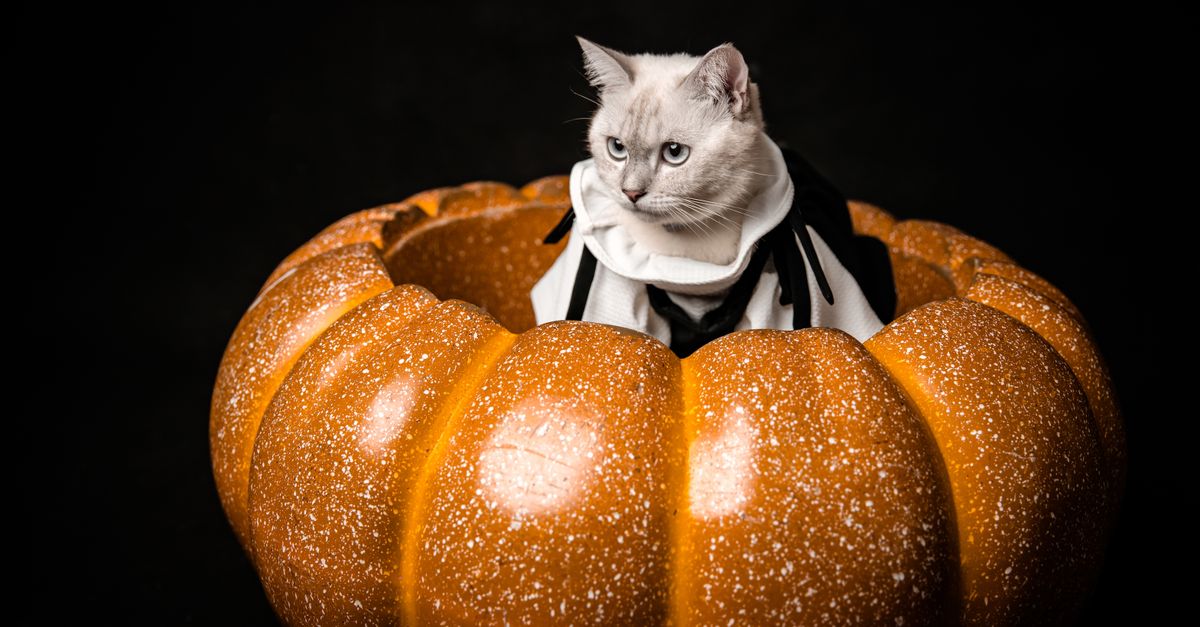
A plain blanket, a clear section of wall, or a sturdy backdrop can give the photograph a Halloween mood without competing with your cat’s face. One recognizable seasonal object, such as a pumpkin, is often enough. Place it so your cat can investigate without being pushed toward it, and keep heavy or unstable props away from places where your cat might jump.
Inspect everything within reach. Loose string, artificial webbing, glitter, small plastic decorations, wires, and exposed batteries do not belong in the cat’s path. Keep candles and lit pumpkins out of the scene entirely. If you want a warm glow, create it with lighting placed securely beyond your cat’s reach rather than with an open flame.
Keep candy and human Halloween snacks away from the photo area, even if they would look appealing in a picture. For help planning what stays off the menu, see what holiday foods to avoid giving your cat.
Make room for your cat’s usual behavior
Think about where your cat naturally pauses. Do they sit on a particular rug, look out from beside a window, or settle on a favorite chair? Build the composition around that spot if it can be made safe. Moving a pumpkin into the background of a familiar setting is usually more practical than asking a cat to remain on an unfamiliar platform.
If another person is helping, agree on roles first. One person can take the photographs while the other offers a toy or treat without crowding the cat. Avoid having several people call your cat at once. Multiple sounds and movements can make it harder to capture a calm expression and harder to notice when your cat wants to leave.
Use light that reveals the eyes and fur
Soft daylight from a window is a useful starting point for indoor cat photography. Place the photo area near the window rather than relying on a ceiling light directly above your cat. Light arriving from the side can reveal the shape of the face and the texture of the fur. If direct sun creates stark bright patches, move farther from the window or soften the light with a curtain.
Try to avoid direct camera flash. A sudden burst can startle a cat, and it may create distracting reflections in the eyes. If the room is too dark, improve the room light or move the session to a brighter time rather than repeatedly flashing at your cat. Keep lamps stable, cool, and away from any path your cat may take.
How to photograph a black cat for Halloween
A black cat can disappear against a dark backdrop, particularly when the camera exposes for a bright window or pale decoration. Give the outline of the cat some separation from the background. A lighter blanket or wall can help, provided it is not so bright that the cat’s face becomes a silhouette. Angle the scene so light reaches the eyes, whiskers, and front of the face.
Check a test photograph before introducing an accessory. If the cat appears as a featureless dark shape, adjust the angle or lighting. You can also tap the face on a phone screen to set focus and, where your camera permits it, raise the exposure slightly. Watch the highlights in pale props so they do not lose all detail. This is a technical problem, not a reason to flood your cat with bright light.
Halloween images of black cats also offer a chance to portray them as the individuals they are rather than as symbols of bad luck. ASCG Visionary Publications explores that wider cultural context in our video about black cat myths. For the photograph itself, clear eyes and a relaxed expression tell a far more interesting story than a superstition.
Frame the portrait from your cat’s perspective
Lower the phone or camera to approximately your cat’s eye level. From there, the viewer sees the face, whiskers, paws, and costume detail without the proportions that can result from shooting straight down. You do not need to put the camera inches from your cat. Give them space, particularly if a phone held close makes them lean away.
Focus on the nearest eye when you can. On a phone, tap the eye on the screen before taking the picture. On a camera, choose a focus point over the eye or use a suitable subject tracking setting if your equipment offers one. Check the first images at full size. A sharp pumpkin with an unfocused cat is a sign that the camera selected the wrong subject.
Leave space for natural movement
Frame a little wider than you think you need. Cats turn their heads, lift a paw, and change position without warning. Extra room around the ears, tail, and accessory lets you keep those movements in the photograph and crop later. Do not use the extra room as an excuse to place tempting but unsafe props closer to your cat.
Try a few different compositions without moving your cat by force:
- Portrait: Include the face and enough of the accessory to show the Halloween theme.
- Environmental view: Step back to show your cat in a familiar room with a seasonal object in the background.
- Detail: Photograph a relaxed paw beside a pumpkin or a close view of a costume accent, while keeping the cat free to move.
- Candid moment: Capture your cat looking toward a toy, sniffing a safe object, or settling into their usual spot.
Before trying another angle, ask whether your cat is still comfortable. A variety of photographs is worthwhile only while the session remains easy for them.
Set up your phone or camera for quick action
Clean the lens first. A smudge can make a bright indoor scene look hazy, and it is much easier to fix before your cat arrives than afterward. Charge the device, check the available storage, and open the camera app in advance. Silence any unexpected alerts if possible so a notification does not interrupt a calm moment.
Using a phone
Use the main camera and avoid heavy digital zoom, which can reduce image quality. Get closer only if your cat remains at ease, or take a wider photograph and crop it afterward. Tap the nearest eye to focus. If your phone has a burst feature, use it when your cat looks toward the lens or starts to move. Different phones activate burst mode differently, so learn the control before putting on the costume.
Portrait mode can blur a busy background, but inspect the result. It may blur whiskers, ears, or the edge of an accessory along with the background. A clear standard photograph is better than an artificial blur that cuts into your cat’s features.
Using a camera
A fast enough shutter helps prevent blur when your cat turns or lifts a paw. If images look soft from movement, increase the shutter speed and compensate with available light or camera sensitivity as needed. Continuous shooting can help you catch brief expressions, but take a short sequence and then look up from the viewfinder. Watching your cat directly is more important than collecting a large number of frames.
Focus and exposure settings vary by camera, so test them with the scene in place. If a dark costume and bright backdrop are both in the frame, review the image to see whether the cat’s face retains detail. Correct the light or exposure before the costumed part of the session begins.
Give your cat a reason to look, not a command to pose
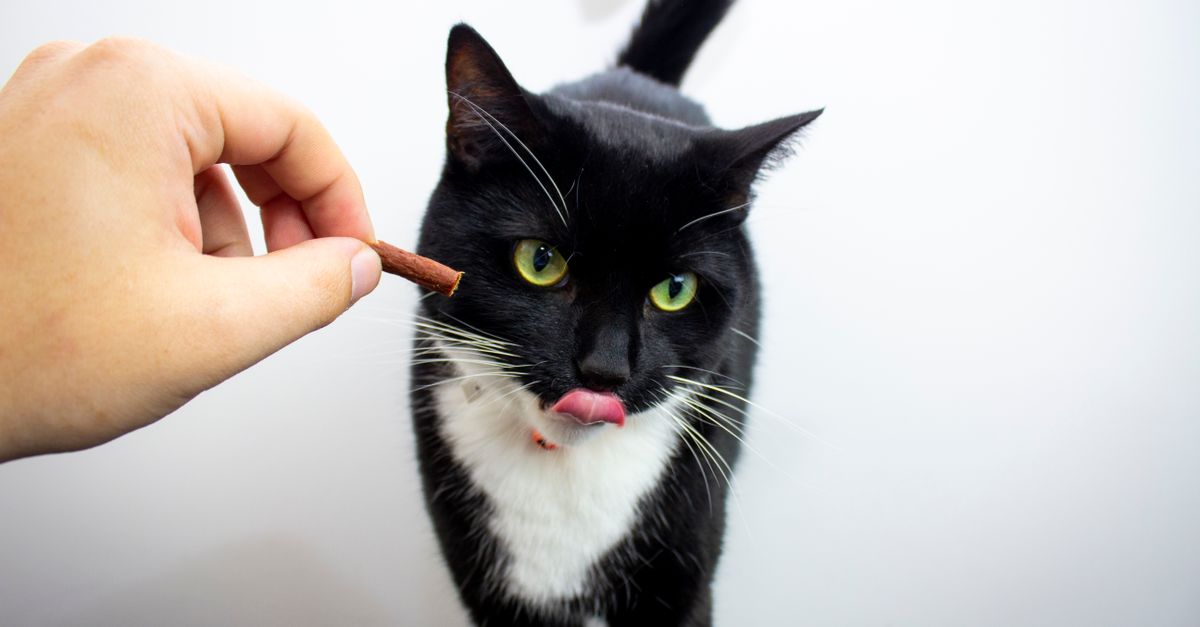
Hold a favorite toy near the camera for a moment, or have a helper offer a treat at a comfortable distance. The goal is to invite one natural glance, not to keep your cat staring until you get a particular expression. If your cat would rather look elsewhere, photograph that. A profile showing attentive ears or a quiet glance toward the window can be more engaging than direct eye contact.
Keep the toy away from dangling costume pieces so your cat does not catch a claw in the fabric while playing. Do not put treats inside an accessory or on a prop that you do not want your cat to chew. If your cat becomes excited and starts running or pouncing, remove any outfit that could snag before continuing to play.
At ASCG Visionary Publications, we favor candid images because they let a cat behave like a cat. A curious pause, a look toward a familiar person, or a settled posture communicates far more about an individual animal than a pose held through restraint.
Know when to end the photo session
Do not set a required number of pictures. End while your cat still seems comfortable, or immediately when that changes. Repeatedly replacing a costume after your cat removes it is a clear sign that the photograph is becoming more important than the experience. Take it off, let your cat return to normal activity, and use the images you already have.
After removing the accessory, check that nothing has caught around a paw, under an arm, or near the neck. Offer your cat space. If they seek interaction, you can reward them with a treat, gentle attention, or a familiar game. If they move away, leave them alone rather than bringing them back for one more frame.
Keep the cat indoors for the session. A Halloween evening may bring visitors, open doors, and unfamiliar sounds. An outdoor location adds escape risks and distractions that do not improve the portrait. If you plan to share the image later, you can choose it once your cat is safely back to their usual routine.
When a costume is not the right choice
A no costume portrait is not a fallback of lesser quality. It is often the best option for a cat who dislikes handling, an older cat whose movement you do not want to complicate, or a cat who becomes uneasy around new objects. Photograph them where they already feel settled, then add the Halloween theme through the surroundings.
Try a safe pumpkin placed in the background, a seasonal blanket beneath a familiar resting spot, or a plain backdrop with Halloween colors. Keep the decorations separate from your cat if they attract chewing or swatting. Another option is to photograph your cat against an uncluttered background and add a simple seasonal greeting when editing. Your cat never has to wear the theme for the image to feel like Halloween.
If you are deciding between an outfit and a nearby prop, choose the option that requires less from your cat. An outfit must fit, remain secure, and be tolerated on the body. A prop can often sit well out of reach while still appearing in the frame. Neither option is safe if it creates stress or introduces a chewing, falling, or escape hazard.
Best practices when selecting and editing the photographs
Review the session for more than technical sharpness. Look for a photograph in which your cat appears at ease, the eyes are visible, and the costume or seasonal setting is identifiable without overwhelming the animal. A slightly imperfect candid image may capture their personality better than a meticulously arranged picture taken just before they tried to leave.
- Check the face first: Choose a frame with clear eyes and an expression that reflects your cat’s normal behavior.
- Crop cautiously: Remove distracting objects from the edges without cutting off ears, paws, or important costume details.
- Adjust light gently: Lift shadows if dark fur has lost detail, but avoid editing that changes the natural appearance of your cat.
- Keep an original: Save the unedited photograph so you can revisit the crop or color later.
- Consider the context: If a costume shifted awkwardly or your cat looks uncomfortable, choose another frame rather than editing away signs that the session should have stopped.
If a Halloween photo of your black cat is going online, a caption about their actual personality can help move the conversation beyond familiar stereotypes. Our look at black cats in movies and folklore explores why those associations are so persistent. The picture itself can present a simpler truth: this is your cat, enjoying a familiar moment at home.
Frequently asked questions
What is the best way to photograph a cat in a Halloween costume?
Prepare a quiet indoor setting, check that the costume allows normal movement, and use soft light near a window. Focus on the nearest eye, photograph at your cat’s level, and take pictures while your cat remains relaxed. Stop and remove the costume if their behavior changes.
How long should my cat wear a costume for pictures?
Only for the brief period your cat is comfortable and actively supervised. There is no session length that is appropriate for every cat. Have the setting and camera ready first so you can remove the accessory promptly after taking photographs.
Is it safe to put a Halloween hat on a cat?
Only consider a hat if your cat already tolerates it and it does not shift over the eyes, obstruct the ears, or require a tight fastening. If your cat shakes it off or seems uneasy, do not keep replacing it. Set the hat beside your cat as a prop instead.
Why does my cat freeze when I put on a costume?
Stillness does not necessarily mean acceptance. A cat may freeze when an unfamiliar item restricts movement or causes stress. Remove the costume and let your cat move freely. Do not treat a frozen posture as a useful pose for photography.
Should I use flash to photograph a black cat?
Start with soft window light and a background that contrasts with dark fur. Direct flash may startle your cat and create distracting eye reflections. If the face lacks detail, change the angle or available light and adjust exposure if your device allows it.
What camera settings help with a moving cat?
Use a shutter speed that keeps movement sharp, focus on the eye, and take a short burst when your cat turns toward the camera. On a phone, tap the eye to focus and use the main camera without excessive digital zoom. Better light makes these choices easier.
Can I get a Halloween portrait if my cat refuses a costume?
Yes. Photograph your cat in a familiar spot with a pumpkin or seasonal color in the background, or add a simple Halloween greeting during editing. A relaxed portrait without clothing is preferable to a picture made by forcing an accessory onto your cat.
What Halloween props should stay away from cats?
Keep open flames, lit pumpkins, candy, loose strings, artificial webbing, small decorations, and accessible wires or batteries away from the photo area. Choose stable props, inspect them before the session, and supervise your cat throughout.
A portrait worth keeping
The most useful photography plan is the one your cat can comfortably take part in. Prepare the scene, choose gentle light, focus on the eyes, and let ordinary cat behavior shape the picture. If an accessory works, photograph it briefly. If it does not, put it away and keep the moment.
For more guidance on understanding cats and caring for them through everyday and seasonal changes, explore the pet education articles from ASCG Visionary Publications. We believe the photographs people treasure most begin with paying attention to the animal in front of them.