You thought your cat and dog were getting along just fine. Then suddenly, they snap at each other out of nowhere. This “sudden clash” isn’t out the blue like we are often led to believe it is. it’s a buildup of small signals you might be missing. When you learn to read cat and dog body language before tension explodes, you can calm the moment instead of guessing why they fight. Let’s break down what those hidden warnings look like and how your home can feel peaceful again.
Understanding Cat and Dog Dynamics
Recognizing the underlying reasons for cat and dog disputes is essential for a harmonious household. Understanding their behavior can prevent conflicts.
Why Cats and Dogs Fight
Cats and dogs often clash due to misunderstandings. Each species communicates differently, and their signals can get lost in translation. Cats might appear aloof, while dogs tend to be more expressive. This mismatch can lead to frustrations and clashes. For instance, a wagging tail in a dog may mean happiness, but in a cat, it could signal annoyance. Understanding these differences is key to preventing fights. If a cat feels threatened by a dog’s playful approach, it might react defensively. To reduce conflict, ensure each pet has its own space and introduce them gradually to new situations.
Reading Pet Body Language
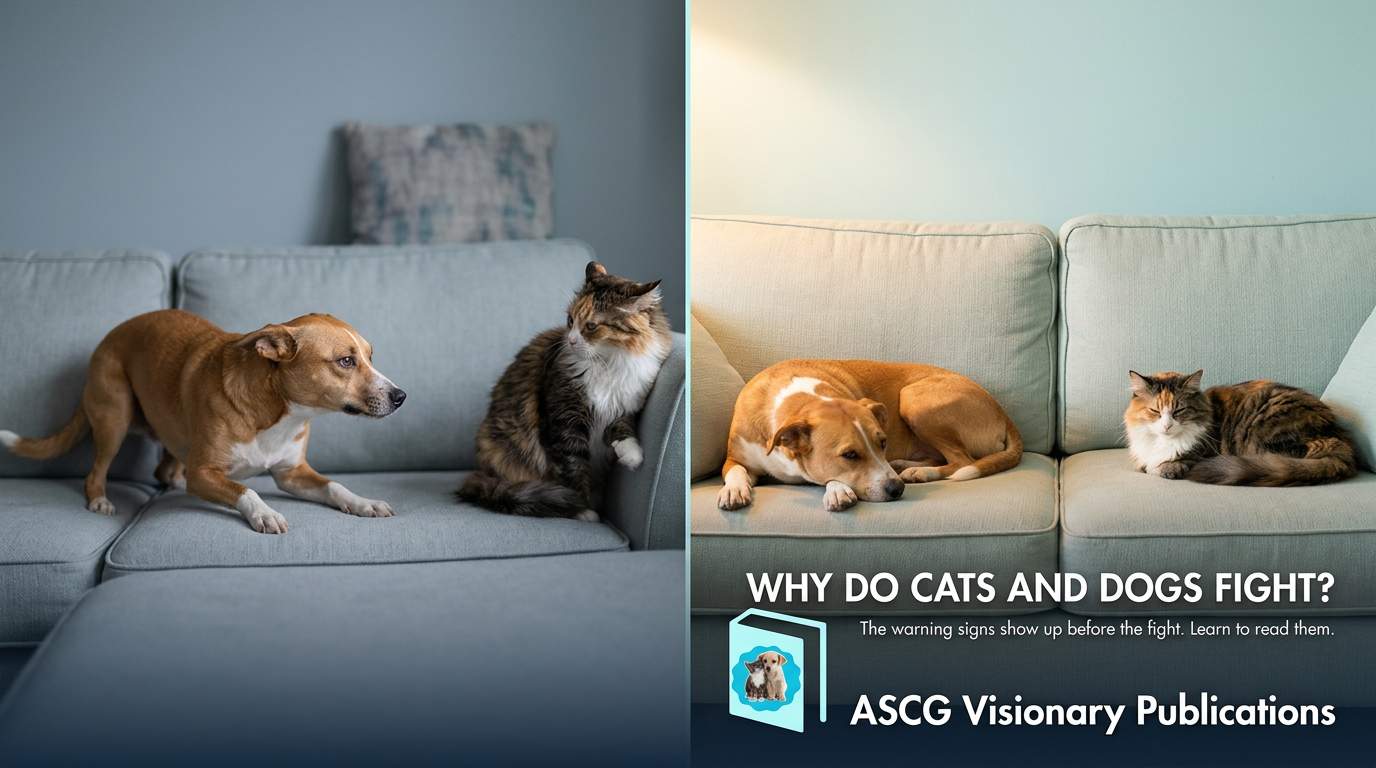
Observing body language can reveal much about your pet’s emotional state. Dogs often use their whole body to communicate. A relaxed dog will have soft, loose movements, while a tense one may have stiff posture and ears pinned back. Cats, on the other hand, are subtler. A content cat might purr and knead, but a stressed one could have dilated pupils and flattened ears. Understanding these cues can help you intervene before a situation escalates. Check out this detailed guide on pet body language.
Cat Stress Signals and Dog Stress Signals
Stress signals in pets are crucial indicators of their comfort levels. In cats, signs of stress can include hiding, excessive grooming, or a twitching tail. Dogs might show stress by panting, whining, or avoiding eye contact. Recognizing these signals allows you to address the root cause of their anxiety. Creating a calm environment with safe spaces and routine can help alleviate stress. For more insights, visit understanding pet body language.
Spotting Tension Before Conflict
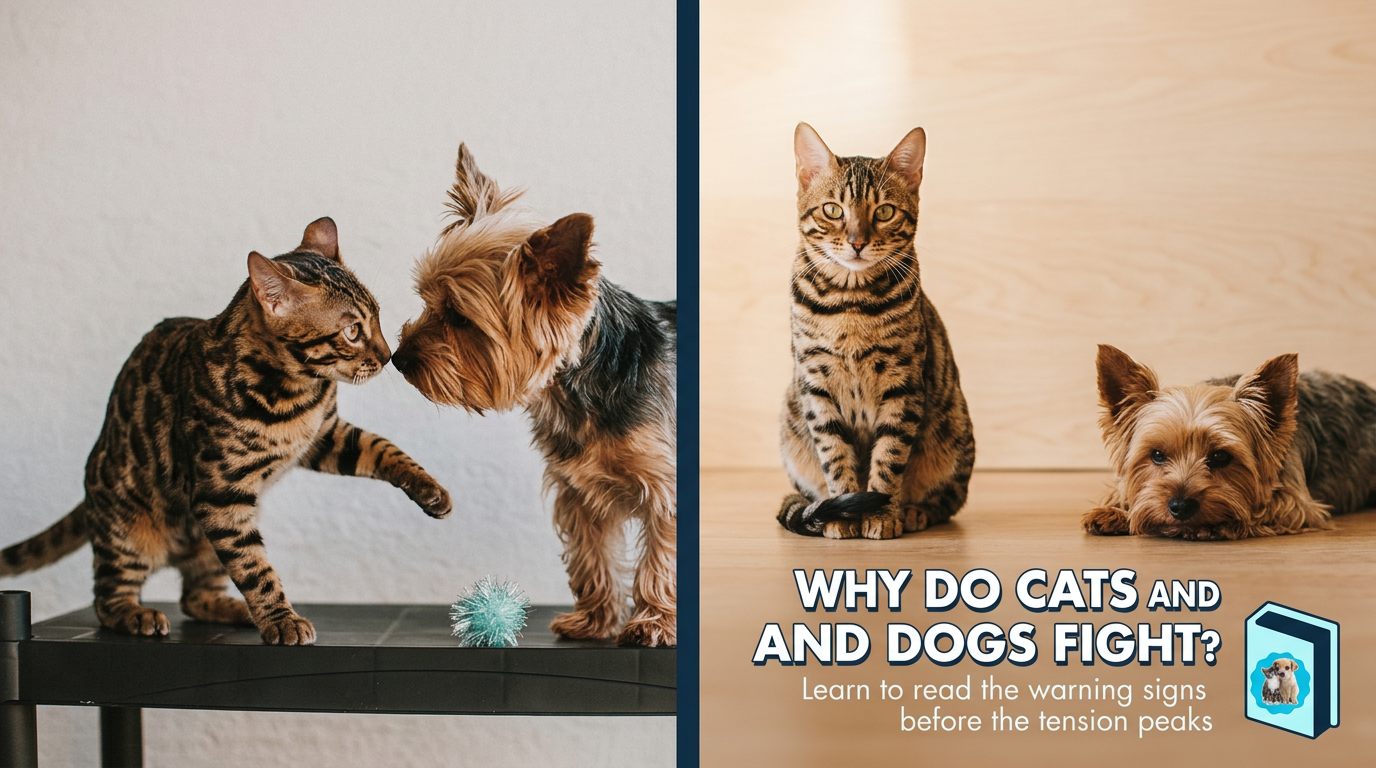
Catching early tension cues can prevent full-blown conflicts. This section offers tips to recognize and address these signs.
Multi Pet Household Tips
In households with multiple pets, setting clear boundaries is vital. Each pet should have its own space for eating, resting, and playing. This reduces competition and stress. Consistent routines help pets feel secure, and regular playtime can channel energy positively. Encourage quiet time and ensure each pet gets individual attention to strengthen bonds. For more advice, explore these multi pet household tips.
Early Warning Signals
Detecting early warning signs can prevent fights. Watch for stiff body posture, direct staring, or growling. These signals indicate discomfort. Redirect their focus with toys or treats to diffuse tension. By observing interactions closely, you can step in before conflicts escalate. It’s a proactive approach to maintaining peace in your home.
Resource Guarding in Pets
Resource guarding is a common cause of tension among pets. It occurs when pets become possessive of food, toys, or space. To manage this, ensure resources are plentiful and evenly distributed. Training can help pets learn to share and feel secure. Addressing this behavior early prevents it from becoming a habit, reducing potential conflicts.
Creating a Peaceful Pet Environment
A harmonious household requires effort and understanding. Here’s how to create an environment where both cats and dogs can thrive.
Cat Dog Fight Prevention
Preventing fights between cats and dogs involves understanding and environment management. Create separate zones for each pet to feel secure and respected. Use baby gates or barriers to allow visual contact without direct interaction. Swap bedding or toys between pets to familiarize them with each other’s scent, easing tensions naturally.
Calm Pet Training Techniques
Training should be a positive experience for your pets. Use reward-based methods to encourage good behavior, and always be consistent. Basic commands like “sit” or “stay” can manage and prevent aggressive encounters. Regular training sessions enhance communication and trust between you and your pets.
Pet Family Support Resources
Support is available for pet families facing challenges. Joining support groups or seeking advice from a professional can provide guidance. Books, articles, and videos offer valuable insights into pet behavior and care. Engaging with a community can offer reassurance and practical advice for a peaceful pet household.
Frequently Asked Questions
Why do cats and dogs fight suddenly?
Cats and dogs may fight due to miscommunication or competition for resources. Understanding their body language can help prevent sudden clashes.
What are the signs of stress in dogs and cats?
Stress signs in cats include hiding or excessive grooming, while dogs might pant or avoid eye contact. Recognizing these signs can help address the issue early.
How can I introduce a new pet to my household?
Introduce pets slowly, using barriers and scent swapping to ease the transition. Supervise interactions and provide individual spaces to reduce anxiety.
What is resource guarding in pets?
Resource guarding is when pets become possessive over food, toys, or spaces. Addressing it involves training and ensuring ample resources for all pets.
How do I create a peaceful environment for my pets?
Provide separate spaces, use positive reinforcement training, and establish routine to create a harmonious home for both cats and dogs.