
Camping with your dog or cat should bring joy, not worry. But when a tick bites, a snake slithers close, or a bee stings, those moments can turn tense fast. Knowing how to spot trouble and act quickly makes all the difference in keeping your pet safe. This guide walks you through must-have items and simple steps for camping with dogs safety and cats safety, so you feel ready for whatever nature throws your way. Check out this resource for more tips on pet preparedness here.
Preparing for Pet Safety
When venturing into the great outdoors, it’s crucial to prioritize your pet’s safety. This means understanding the risks and preparing accordingly. Here, we focus on potential threats like ticks, snakes, and bees to ensure your camping trip remains enjoyable.
Tick Prevention for Dogs and Cats
Ticks can be a pesky problem for pets during any camping trip. The key to tick prevention for dogs and cats is vigilance. Before heading out, apply a vet-recommended tick repellent to your pet. Make it a habit to check your pet’s fur regularly, especially after hikes or walks near tall grasses. Be sure to focus on areas ticks love to hide, like under the collar, behind the ears, and between the toes. If you find a tick, don’t panic. Use a pair of fine-tipped tweezers to grasp the tick as close to the skin as possible and pull it out steadily. Remember to clean the area with antiseptic afterward. Bookmark this guide from the Centers for Disease Control and Prevention for more on tick prevention.
Snake Bite Signs in Pets
Spotting snake bite signs in dogs and cats can be tricky but knowing the basics can save their life. Common signs of a snake bite include swelling, bleeding, and lethargy. If you suspect a bite, try to keep your pet calm and immobile to slow the spread of venom. Seeking immediate veterinary attention is crucial. If you’re far from help, carrying a pet first aid booklet can be useful. While rare, some snakes can be deadly, so it’s best to be cautious and informed. Learn more about emergency responses from the Red Cross’s pet disaster preparedness guide.
Responding to Bee Stings
Bee stings aren’t just painful for humans; they’re uncomfortable for pets too. If your dog or cat is stung, you’ll likely notice immediate swelling and discomfort. Gently remove the stinger with a credit card or similar object, scraping it out rather than pinching it. Applying a cold pack can reduce swelling. Monitor your pet for any allergic reactions, such as difficulty breathing or excessive swelling, and seek vet help if symptoms worsen. Knowing these steps ensures that a bee sting doesn’t ruin your camping adventure.
Packing Your Emergency Kit
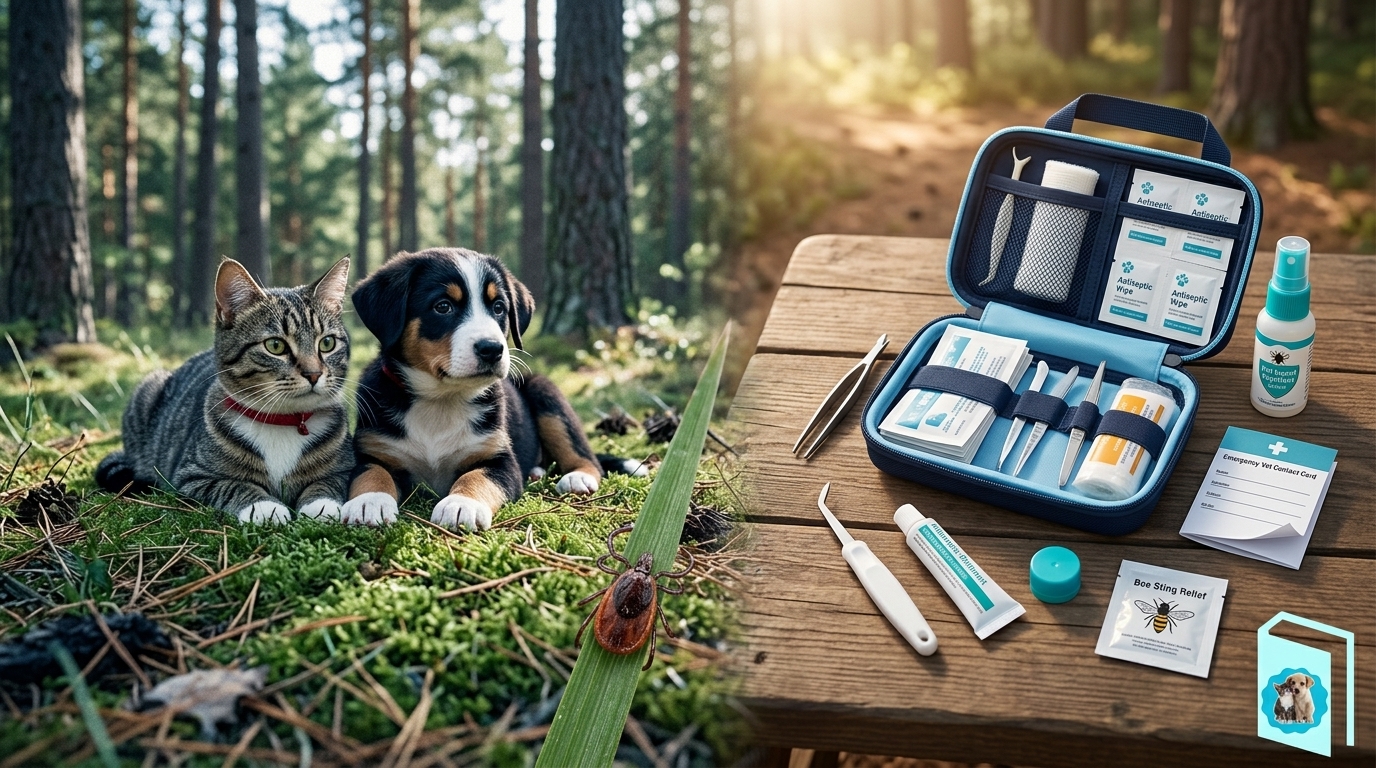
Having an emergency kit ready is essential. With just a bit of planning, you can ensure that any unexpected situation is managed smoothly, keeping you and your pet safe and comfortable.
Pet First Aid Kit Checklist
A well-stocked pet first aid kit is your first line of defense. Include items like bandages, antiseptic wipes, tweezers, and a digital thermometer. Don’t forget your pet’s regular medications and a basic guide to pet first aid. Add a flashlight and extra batteries to handle any situation at night. By having these essentials on hand, you can address minor injuries or manage a crisis until professional help is available. For a complete list of what to include, visit this pet preparedness resource.
Essentials for Safe Travel
Safety while traveling with pets entails more than just a comfy seat in the car. Use a secure pet carrier or safety harness to prevent injury during sudden stops. Pack enough food, water, and portable dishes to keep your pet hydrated and nourished throughout your journey. Include a favorite toy or blanket to provide comfort in unfamiliar environments. Having these travel essentials will ensure your pet feels secure and happy during your trip.
Emergency Vet Contact Tips
Having emergency contact information is crucial. Research and note the nearest veterinary hospitals to your campsite. Keep their contact details handy in both your phone and written form. If your pet has a microchip, ensure the contact info is current and accessible. Knowing who to call in an emergency brings peace of mind and gets your pet the help they need faster.
Keeping Pets Safe Outdoors
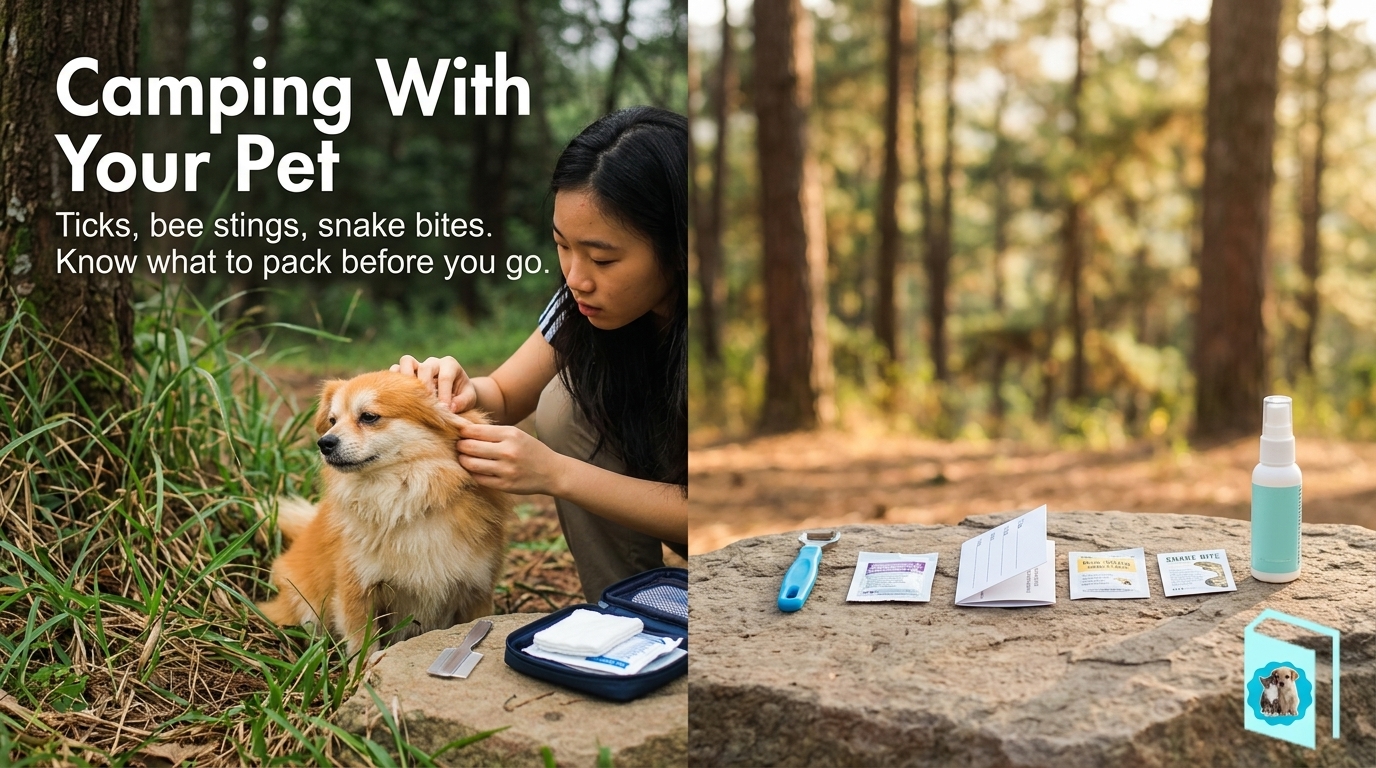
Once you’re at the campsite, proactive measures will keep your furry friends safe. Let’s delve into outdoor safety strategies to ensure a fun and worry-free experience.
Tick Checks and Removal
Perform tick checks on your pet at least twice daily. Run your fingers through their fur, feeling for any bumps or abnormalities. If you find a tick, use tweezers to carefully remove it, making sure to get the head. After removal, clean the bite area with disinfectant. Regular tick checks reduce the risk of tick-borne diseases and keep your pets happy and healthy.
Pet Safe Insect Repellent
Insect repellent is a must, but not all are safe for pets. Opt for a pet-safe repellent to protect your dog or cat from pesky insects without causing harm. Be sure to apply it according to the instructions and reapply as needed, especially after swimming or heavy activity. Keeping bugs at bay means fewer annoyances during your camping trip.
Hydration Tips for Camping 🏕️🐾
Keeping your pet hydrated is crucial, especially in the heat. Carry portable water bowls and offer water often. If you’re hiking, take breaks in shady areas and watch for signs of dehydration, such as excessive panting or drooling. Clean, cool water is your pet’s best friend on camping trips.
Frequently Asked Questions
How do I remove a tick from my dog or cat?
To remove a tick, use tweezers to grasp it as close to your pet’s skin as possible, then pull it out steadily. Clean the area with antiseptic afterward.
What are the signs of a snake bite in pets?
Snake bites can cause swelling, bleeding, and lethargy. If bitten, keep your pet calm and seek immediate veterinary attention.
What should I do if my dog or cat gets stung by a bee?
Gently scrape out the stinger with a credit card, apply a cold pack, and monitor your pet for any allergic reactions. Seek vet help if symptoms worsen.
What should be included in a pet first aid kit?
A pet first aid kit should have bandages, antiseptic wipes, tweezers, a digital thermometer, and any regular medications your pet takes.
How can I keep my pet hydrated while camping?
Use portable water bowls and offer water frequently. Take breaks in shaded areas and watch for signs of dehydration, like excessive panting.