Summer strolls with your dog can feel perfectly safe until the pavement surprises you. If the ground is too hot for your hand, it’s already too hot for your dog’s paws. Many pet parents miss this hidden danger until it’s too late. This guide shows you how a simple hand check and a grass first route can keep your dog’s paw pads protected and your walks stress-free all summer long. For more details, check out this guide.
Hidden Dangers of Hot Pavement
When summer sun heats up, your dog’s paws can be at risk. While you might feel comfortable in the warm air, the ground tells a different story. Here’s what you need to watch out for to keep those paws safe.
Heat Risks for Paw Pads
Did you know that pavement can reach temperatures much hotter than the air? On a sunny day, asphalt can get as hot as 125 degrees Fahrenheit. At this heat, paw pads can burn in just a minute or two. These burns can be painful and take time to heal, making walks uncomfortable for your furry friend. Instead of waiting for problems to arise, it’s important to be proactive in protecting your dog’s paws.
Recognizing Overheated Surfaces
How do you know when the ground is too hot? It’s simple: check the surfaces before your walk. Asphalt, concrete, and even sand can absorb and retain heat. You might notice your dog hesitating or trying to walk on grass instead. Trust their instincts. Look out for surfaces that appear darker or shinier, as they tend to hold more heat.
The Seven Second Hand Test
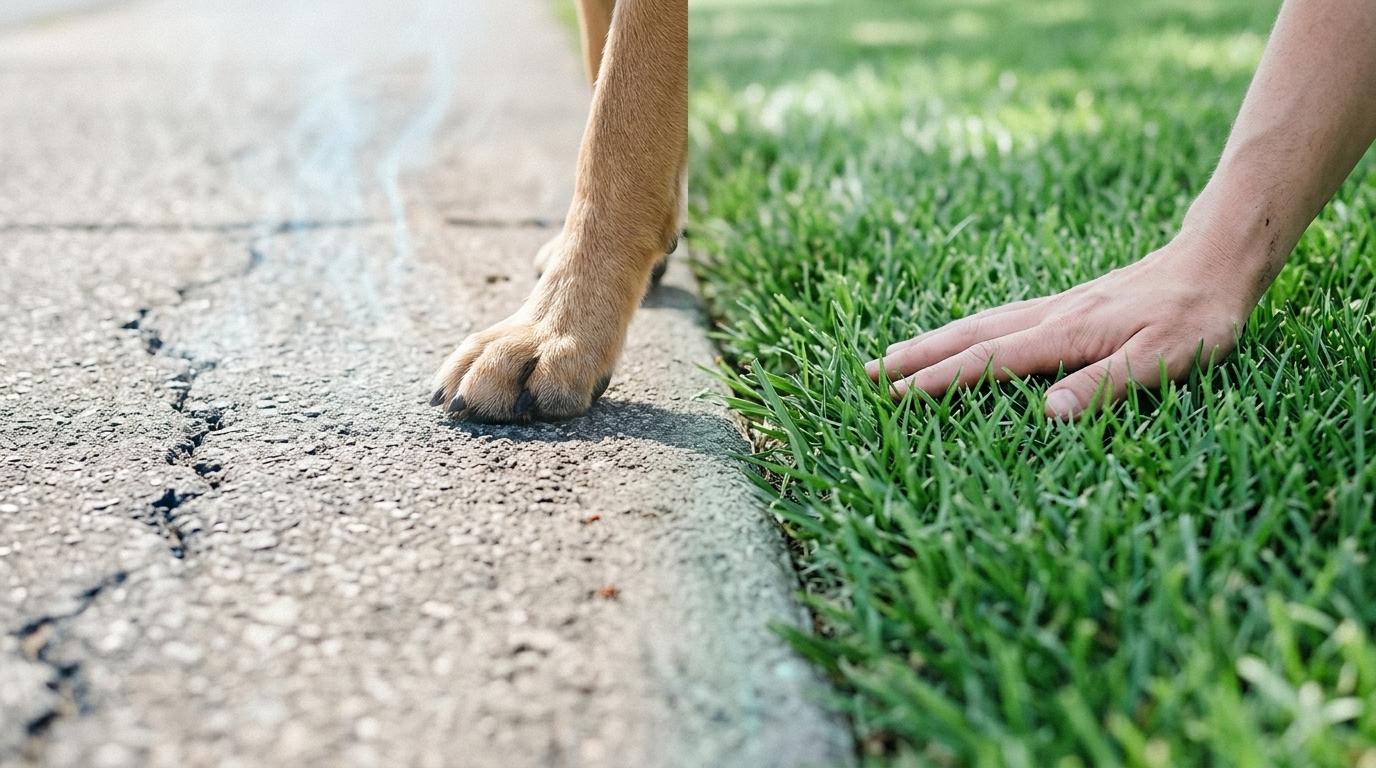
Here’s a quick trick: place the back of your hand on the pavement. If you can’t hold it there for at least seven seconds, it’s too hot for your dog’s paws. This easy test can save your dog from painful burns and make walks safer. Make it a habit each time you head out. Keep your dog’s comfort in mind. It only takes a few seconds to ensure a pleasant walk for both of you.
Creating a Grass First Route
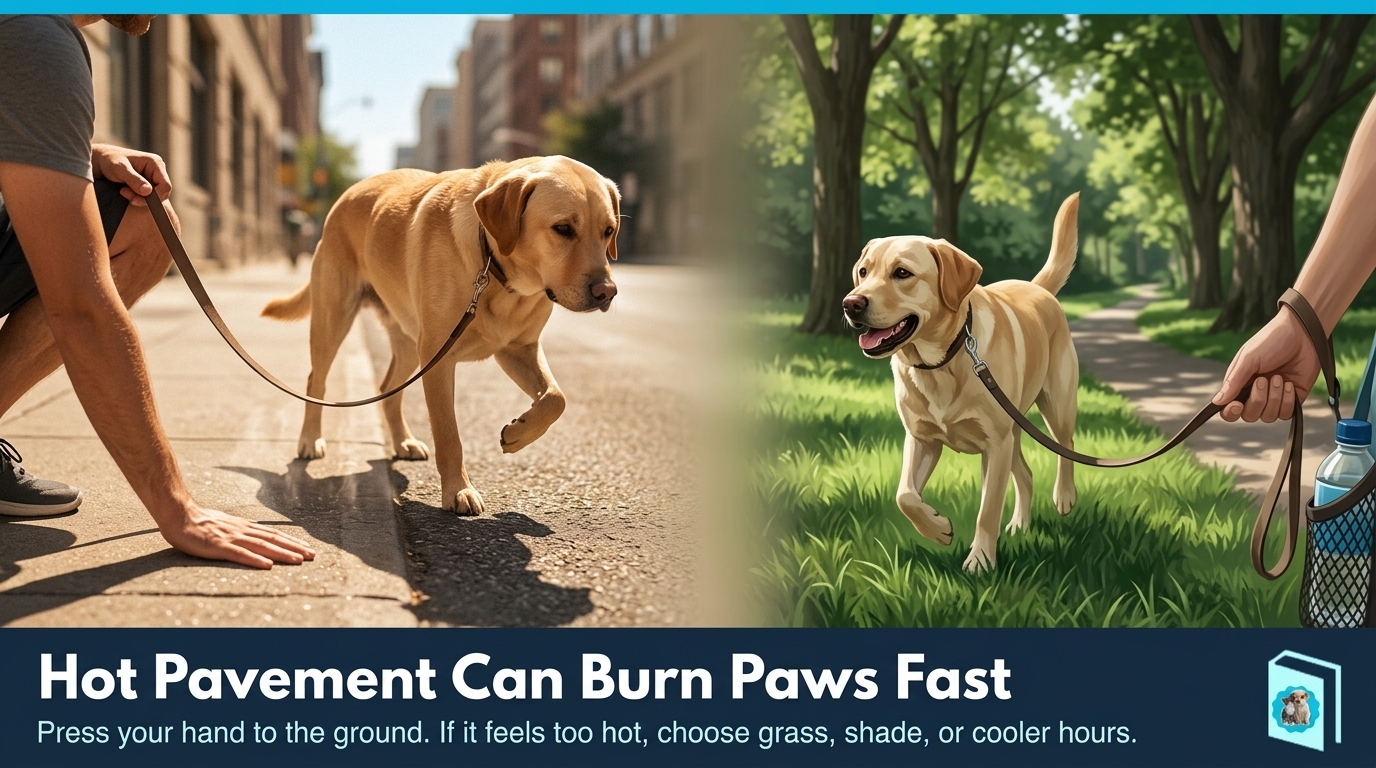
Choosing a grass path can make all the difference on a hot day. Keeping your dog off scorching surfaces helps prevent burns and keeps them cool. Let’s explore how to plan your route.
Benefits of Grass Routes
Grass offers a cooler, softer surface for your dog to walk on. Unlike pavement, grass doesn’t absorb as much heat. This makes it a safer choice during the summer. Walking on grass can also be gentler on your dog’s joints. It provides a natural cushion, which is especially beneficial for older dogs or those with joint issues. Plus, grass routes are often more scenic and enjoyable for both you and your dog.
Shade Walking Tips
Seek out shaded paths to keep things cool. Trees and buildings provide natural cover from direct sunlight. Walking on shaded paths reduces the risk of overheating. You can also plan your walks through parks or wooded areas where shade is abundant. If you can, avoid walking during peak sun hours to minimize exposure. These small changes can make a big difference in temperature.
Cool Hours for Dog Walks
Timing your walks can be just as important as choosing the right route. Aim to walk your dog early in the morning or late in the evening. These are the coolest times of the day. You’ll find the air is more comfortable, and the ground is less likely to burn. By planning your walks for cooler hours, you help protect your dog from unnecessary heat risks.
Protecting Paws from Burns
Even with precautions, accidents can happen. Knowing what to look for and how to respond is crucial for your dog’s health.
Signs of Paw Pad Burns
Watch out for limping, licking, or red and swollen pads. These can be signs of a burn. Your dog might also refuse to walk or show discomfort when standing. It’s important to examine their paws regularly after walks to catch any issues early. If you notice signs of burns, it’s time to take action.
How to Treat Paw Burns
If your dog’s paws are burned, clean them gently with cool water. Avoid using ice, as it can cause further damage. Apply an antiseptic and cover the area with a bandage. Keep your dog off their feet as much as possible until they heal. If the burn looks severe, consult your vet for further care. Quick response can prevent further pain and complications.
Gear for Summer Dog Walking 🌞🐾
Consider investing in protective gear like dog booties. These can shield paws from hot surfaces and provide extra grip. They’re a great option for long walks on unfamiliar terrain. You can find various styles and sizes to fit your dog comfortably. Check out this summer guide for dog boots for more ideas. Remember, a little preparation goes a long way in keeping your furry friend safe and happy.
Frequently Asked Questions
How hot is too hot for dog paws?
Pavement can reach over 125 degrees Fahrenheit even when the air feels comfortable. If it’s too hot for your hand, it’s too hot for your dog’s paws.
What surfaces should I avoid during summer walks?
Avoid asphalt, concrete, and sand as they can become extremely hot. Opt for grass or shaded areas instead to keep your dog’s paws safe.
What should I do if my dog has burned paw pads?
Clean the paws with cool water, apply an antiseptic, and cover with a bandage. Consult your vet if burns appear severe for further care instructions.
Why is grass better for dog walks in summer?
Grass doesn’t absorb as much heat as pavement, keeping it cooler. It also provides a softer surface, reducing joint impact during walks.
When is the best time to walk my dog during summer?
Early mornings and late evenings are ideal. These cooler hours help avoid the hottest temperatures and reduce the risk of paw burns.